
What Happens During a Wedding Ceremony: Decoding the Wedding Ceremony
Having been an engaged couple just like you, trying to imagine and plan our own wedding ceremony, along with having photographed hundreds of Northern Ireland weddings we have a good idea of how a wedding ceremony normally goes.
When we were planning our own wedding though we had only been to a handful of family weddings and didn’t really know what to expect. We know from chatting to our couples that a lot of them find themselves in the same boat and some, have never been to a wedding before. If you are an engaged couple and wondering what actually happens during a wedding ceremony? Read on!
What are the different types of wedding ceremonies in Northern Ireland?
In Northern Ireland there are a few different options, don’t worry we will explain each as we go along. Some couples will opt for a religious ceremony, some will choose a civil ceremony performed by a registrar or performed by an independent celebrant or even a non-legal ceremony. For more info on choosing a wedding celebrant, have a look at this blog post. Choosing a wedding celebrant
Religious wedding ceremonies in Northern Ireland
Every faith and religious denomination will have their own unique twist on how a wedding ceremony works. While most religious ceremonies have all of the same key moments, they all have different ways of doing it.

Civil ceremonies in Northern Ireland
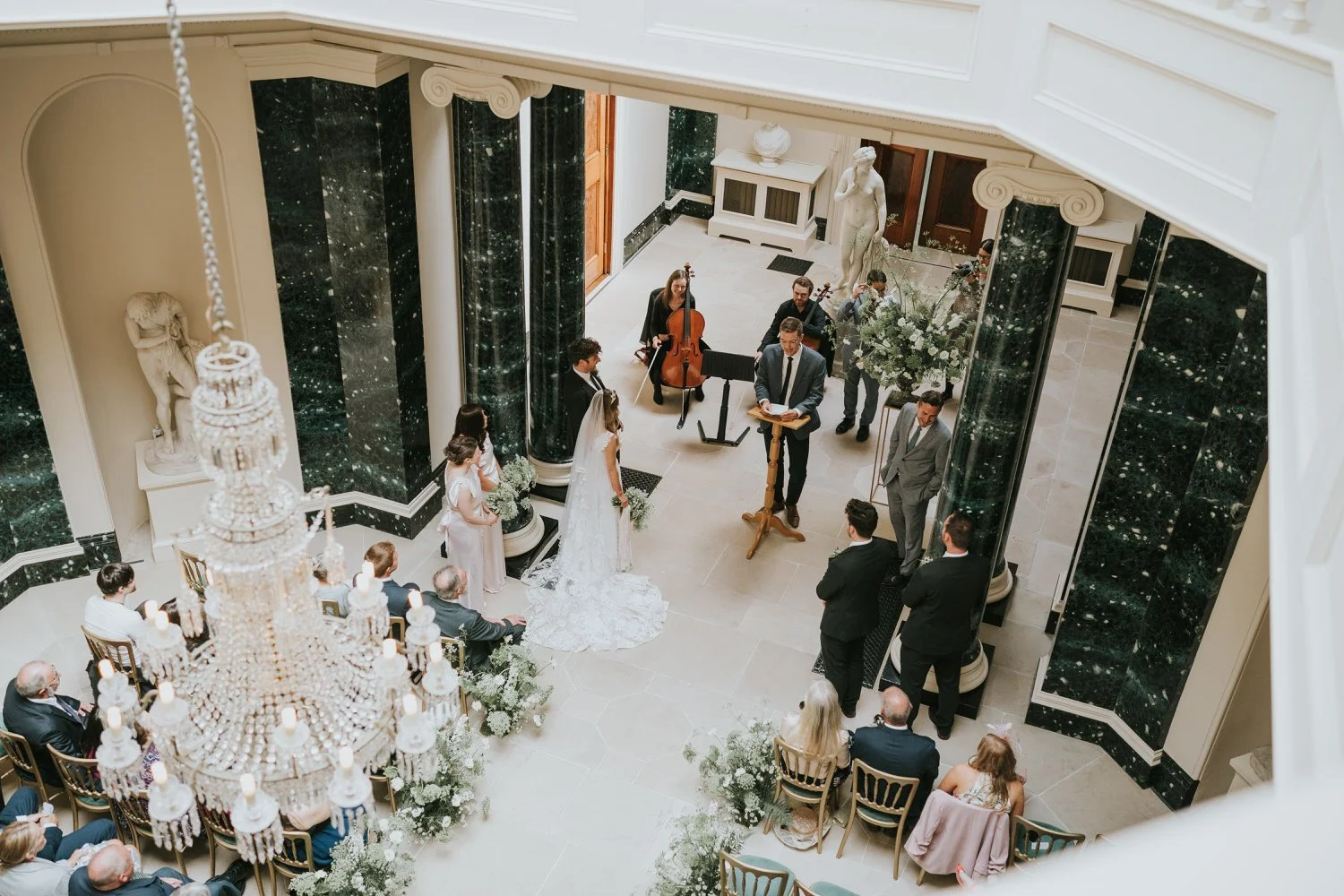
In Northern Ireland the couple will meet with the Registrar at the local registry office or at an approved venue to get legally married. Pretty much every wedding venue in Northern Ireland is approved to hold legal wedding ceremonies but of course it always best to confirm their status with the local registry office.
Non-religious wedding ceremonies in Northern Ireland
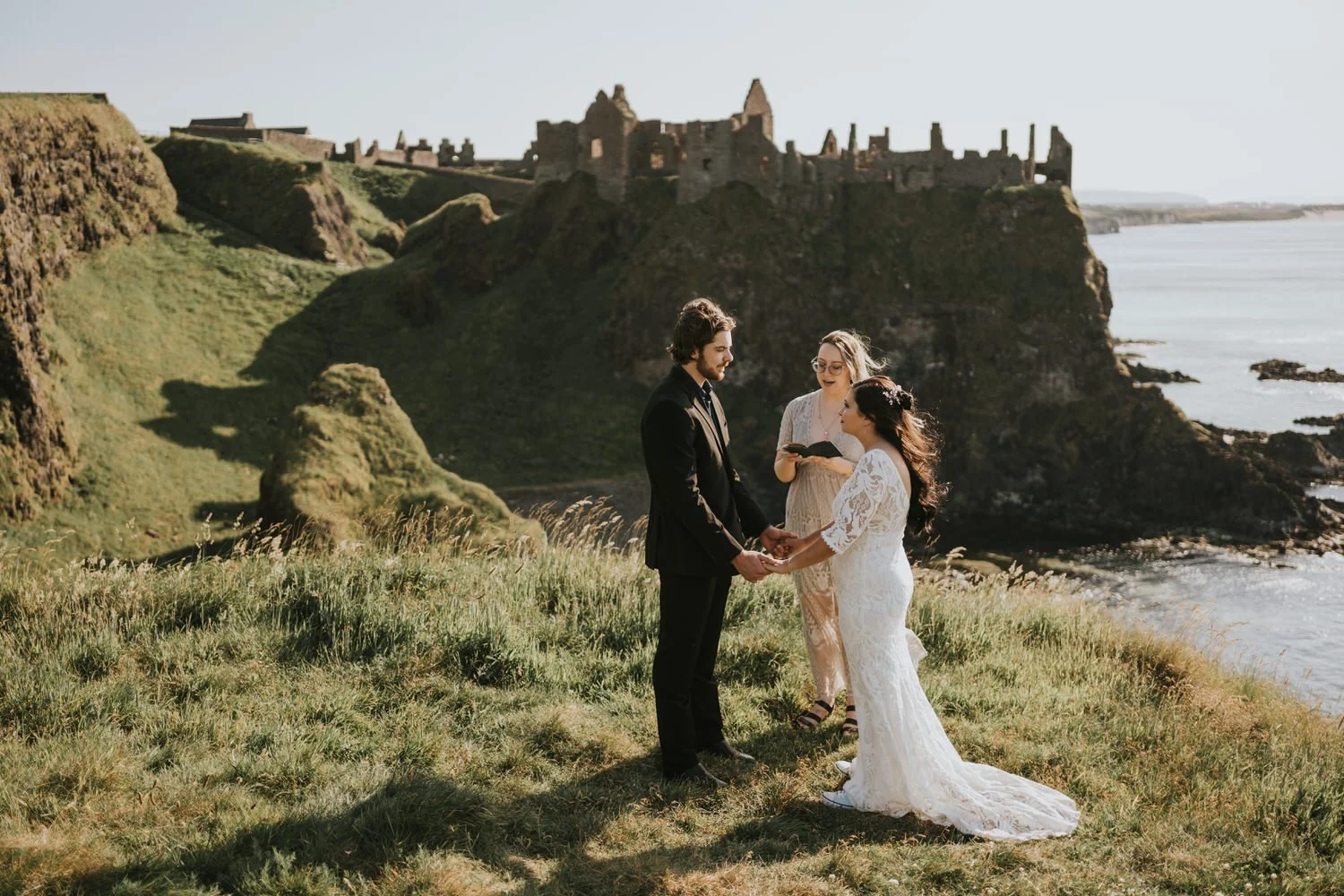
Unlike in other parts of the U.K in Northern Ireland these can be both a legal ceremony or non-legal depending on the celebrant you choose and you can choose to have your ceremony pretty much anywhere you like.
Wedding ceremony format
Even with all of the different options available between the different types of weddings most N.I weddings follow a similar loose format of events.
Arriving for the ceremony
In the U.K and in Ireland the old school tradition is for the groom to arrive before the bride who then walks down the aisle with her dad to be “given away”. Couples now though are a lot more open to ditching old wedding traditions and doing things in a way that suits them best, just as they should! More modern couples will sometimes choose to meet before walking down the aisle for a “First Look”, so that they can share a moment together before the ceremony. Sometimes brides will walk down the aisle accompanied by both parents, a different family member or on their own. We have also seen couples walk down the aisle together. You don’t have to conform to old traditions if you would rather do something else!

The start of the ceremony
The ceremony often starts with the celebrant introducing themselves and providing a brief explanation of what is going to happen. Religious ceremonies often include music and hymns before the actual ceremony begins as well.
Before the vows
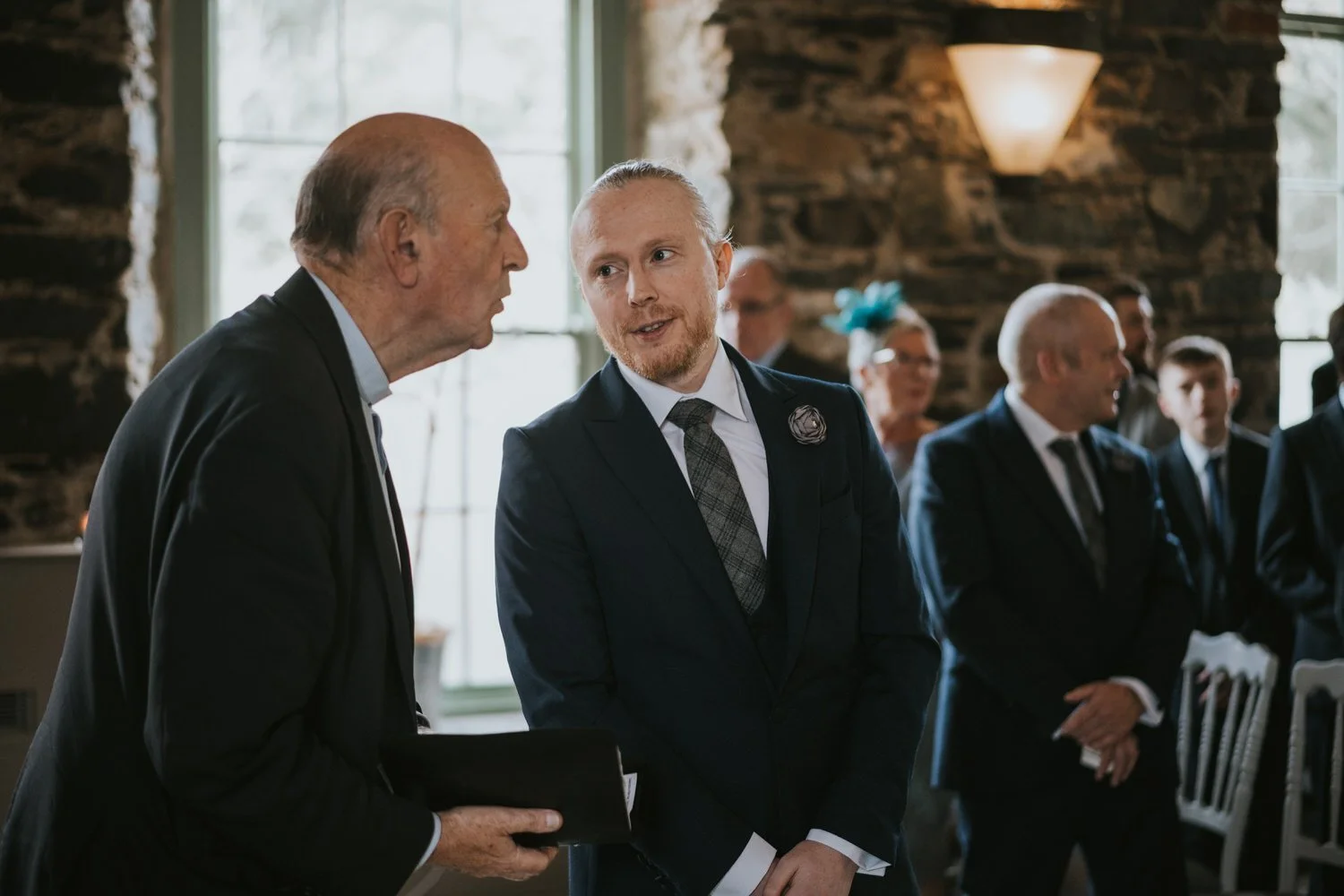
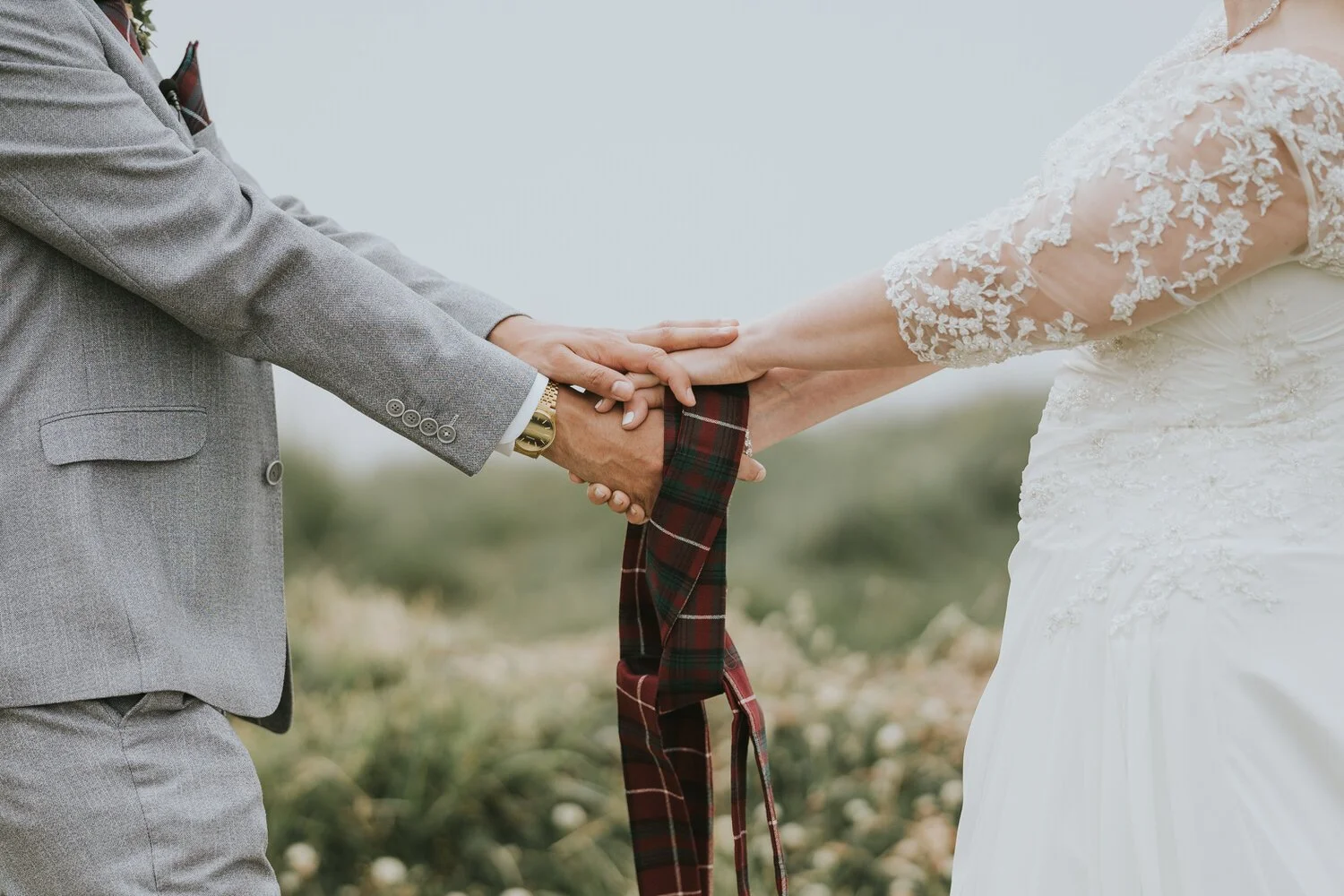
For civil ceremonies sometimes couples arrange for readings from friends and family members before saying their legal vows. This is often the part of the ceremony were religious and no-religious ceremonies differ the most. For religious ceremonies, this is when the celebrant preaches a sermon specific to their faith. For non-religious wedding ceremonies, the celebrants usually share some stories about how the couple met, their first date and some funny stories about them. Some non-religious celebrants can also include things like hand fastening or the Quaich. The Quaich is a cup with 2 handles, this is an ancient Scottish tradition that seals the bond of two people, both the bride and groom drink from the cup, often filled with whisky and this marks the blending of two families.
The wedding vows
For religious ceremonies the vows are often determined by the type of faith. For civil ceremonies it’s all about the legal part of a wedding. For non-religious weddings the vows can be pretty much whatever you want them to be, some couples go for epic vows that pull on the heart strings while others opt for straight out hilarious.
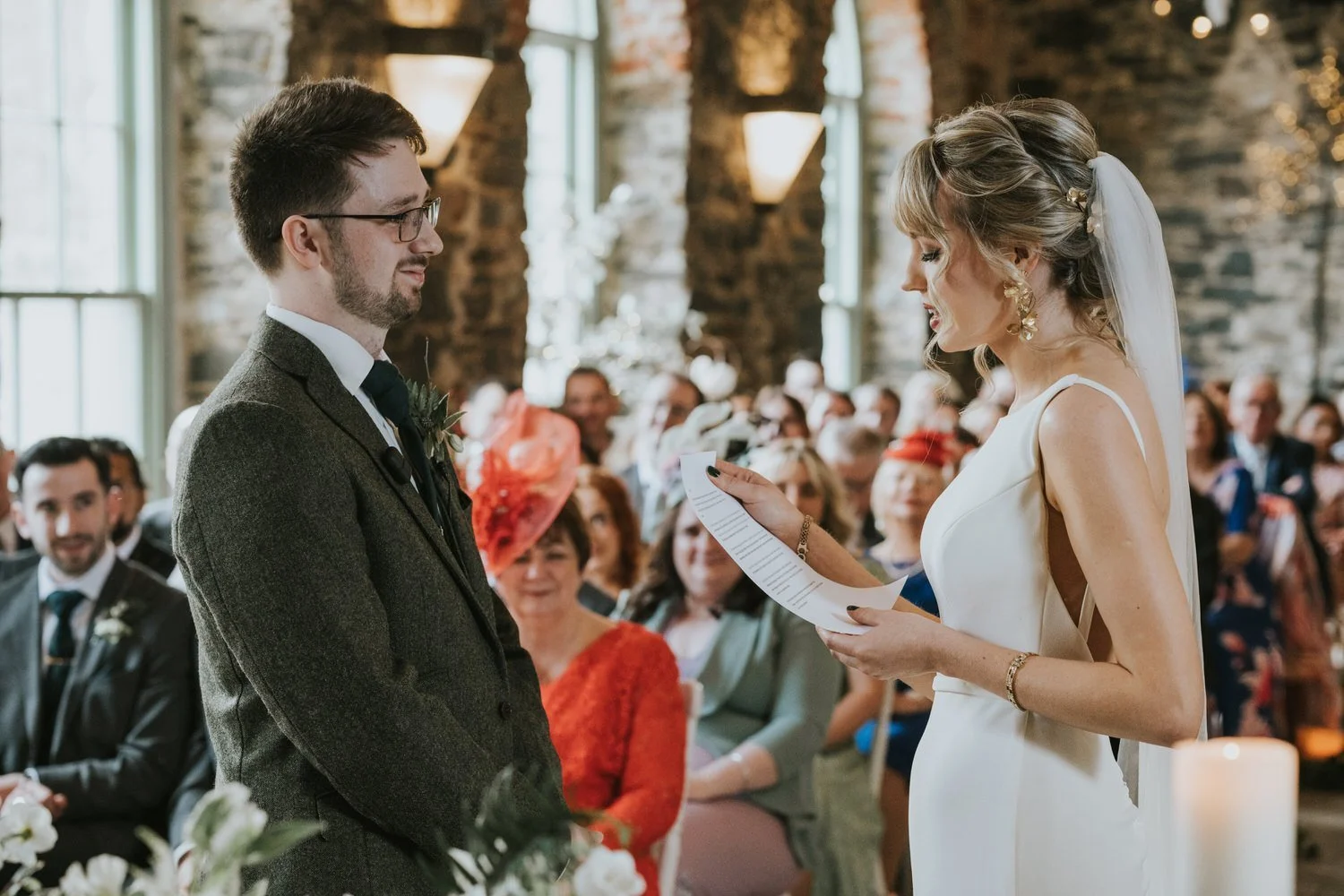
Exchange of the rings and usually but not always the kiss
We have never been to a wedding where rings were not exchanged, no matter what style of ceremony it has been. We photograph a lot of weddings for couples coming into Northern Ireland to get married and only found out recently that in some countries they wear their rings on their right instead of left hands, so there can still sometimes be slight difference but the actual exchanging of wedding rings has happened every time.

For civil and non-religious wedding there is always a “you may now kiss the bride”. For religious weddings sometimes there is not. Usually this is denomination dependent. Even sometimes within the same denominations sometimes the celebrant won’t ask the couple to kiss or they discourage them from doing it. We can only guess that it comes down to the individual celebrant.

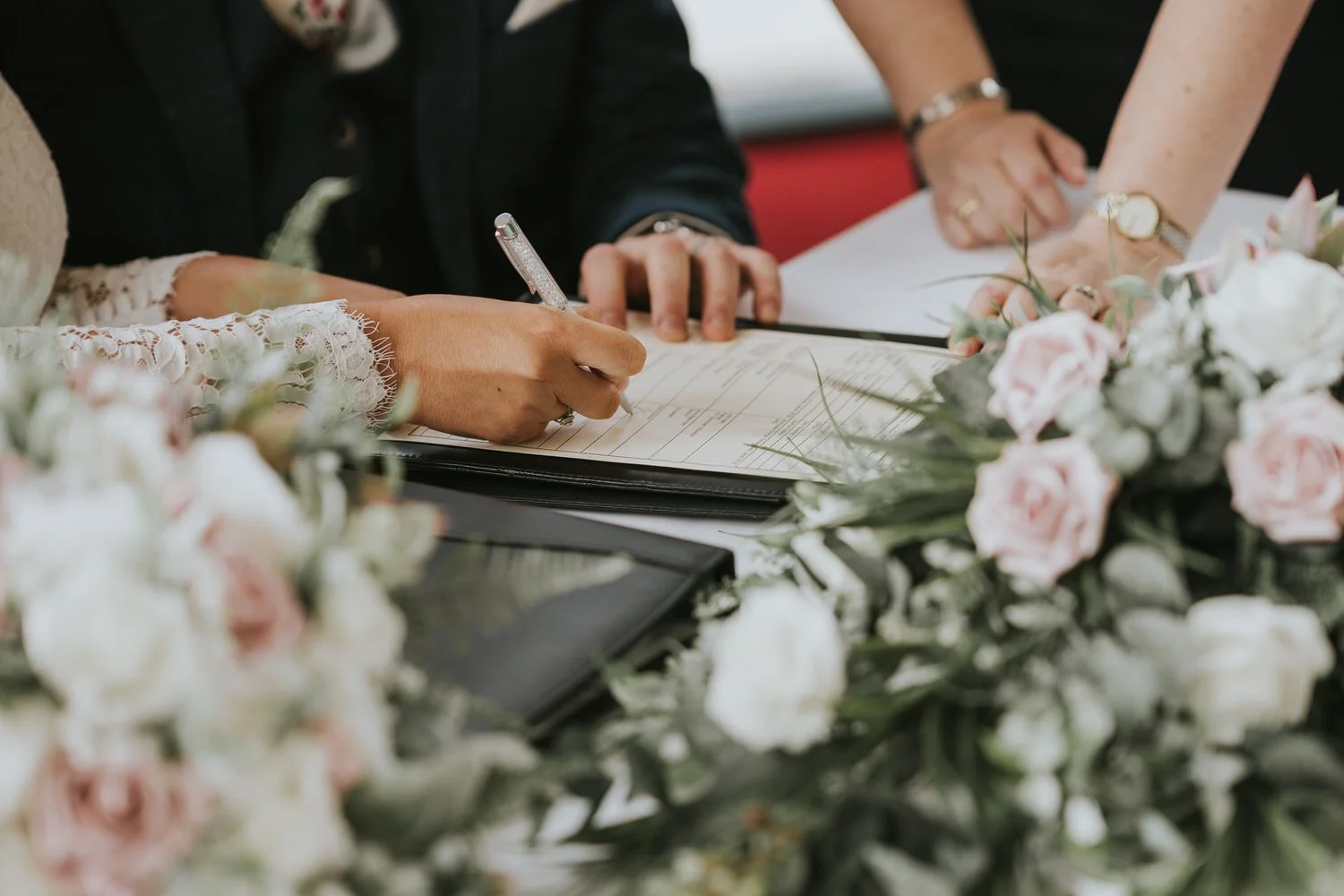
Signing the register
The signing is a must if you want to be legally married. It doesn’t always take place during the actual ceremony though. Sometimes couples have already had their legal ceremony beforehand, this happens a lot when people from two different countries get married as the legal part can be more complicated. Some non-religious celebrants can’t do the legal bit, so if a couple has chosen them, they will have to do the legal bit on another day usually. For religious ceremonies that take place in a church or chapel couples as well as signing their legal documents also sign the church or chapels own marriage registrar so need to sign twice.
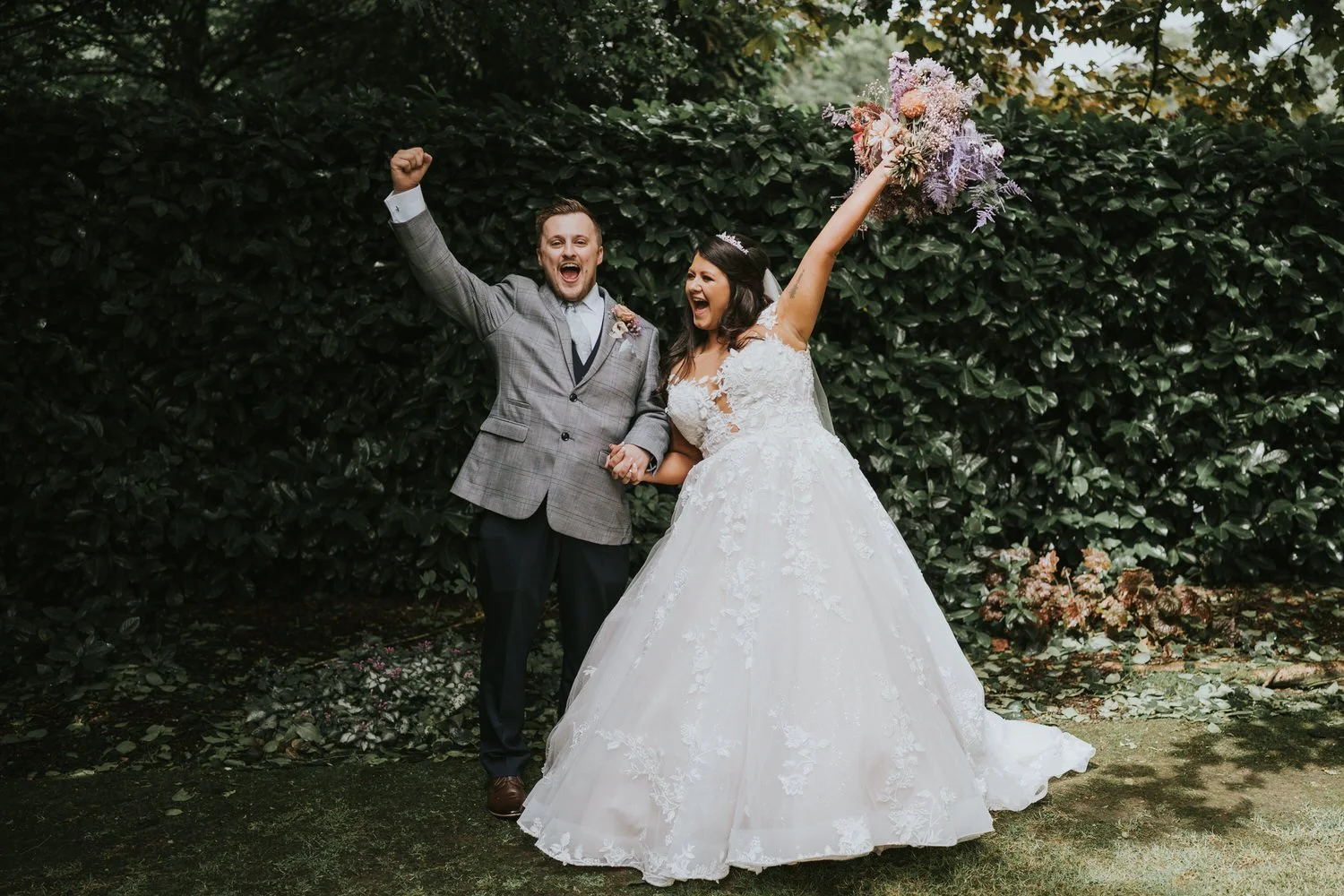
Walking back down the aisle
At the end of the ceremony the celebrant will ask everyone to stand and greet the couple as they walk back down the aisle as husband and wife. Usually there will be some applause and a few excited cheers. Sometimes for religious ceremonies there will be two aisles one is used for everyone to enter and the other is used for everyone to leave.

You are married!
Hopefully this gives you a good idea of what happens during most wedding ceremonies. There has never been more choice for couples in terms of how they want their wedding ceremony to go, every couple can have the day they dreamed off.
If you are an engaged couple planning a wedding you’re wedding and haven’t yet chosen your wedding photographer, get in touch! We would love to hear about all the exciting plans you have.
You might also find these articles helpful If you are in the middle of planning your own wedding
5 OF THE BEST WAYS TO SHARE YOUR WEDDING PHOTOGRAPHS
BEST LOCATIONS FOR WEDDING PHOTOS IN BELFAST
SHOULD YOU BUY A WEDDING ALBUM?
MISTAKES TO AVOID WHEN BOOKING WEDDING VENDORS
20 REASONS WHY YOU SHOULD HAVE A SMALL INTIMATE WEDDING IN NORTHERN IRELAND
HUMANIST WEDDINGS NORTHERN IRELAND
BEST WEDDING VENUES IN NORTHERN IRELAND
ULTIMATE GUIDE TO DUNLUCE CASTLE ELOPEMENTS
WHAT’S IT LIKE HAVING TWO WEDDING PHOTOGRAPHERS
DO I NEED WEDDING PREP PHOTOS?
BEST WEDDING TIPS FOR INTROVERTED COUPLES
BEST REGISTRY OFFICE FOR A WEDDING IN NORTHERN IRELAND
7 REASONS WHY WE MIGHT NOT BE THE RIGHT PHOTOGRAPHER FOR YOU
HOW LONG SHOULD YOU WAIT ON YOUR WEDDING PHOTOS?