
AI and Wedding Photography | Why We Will Never Fake Your Moments
Where we stand
Why we wrote this post
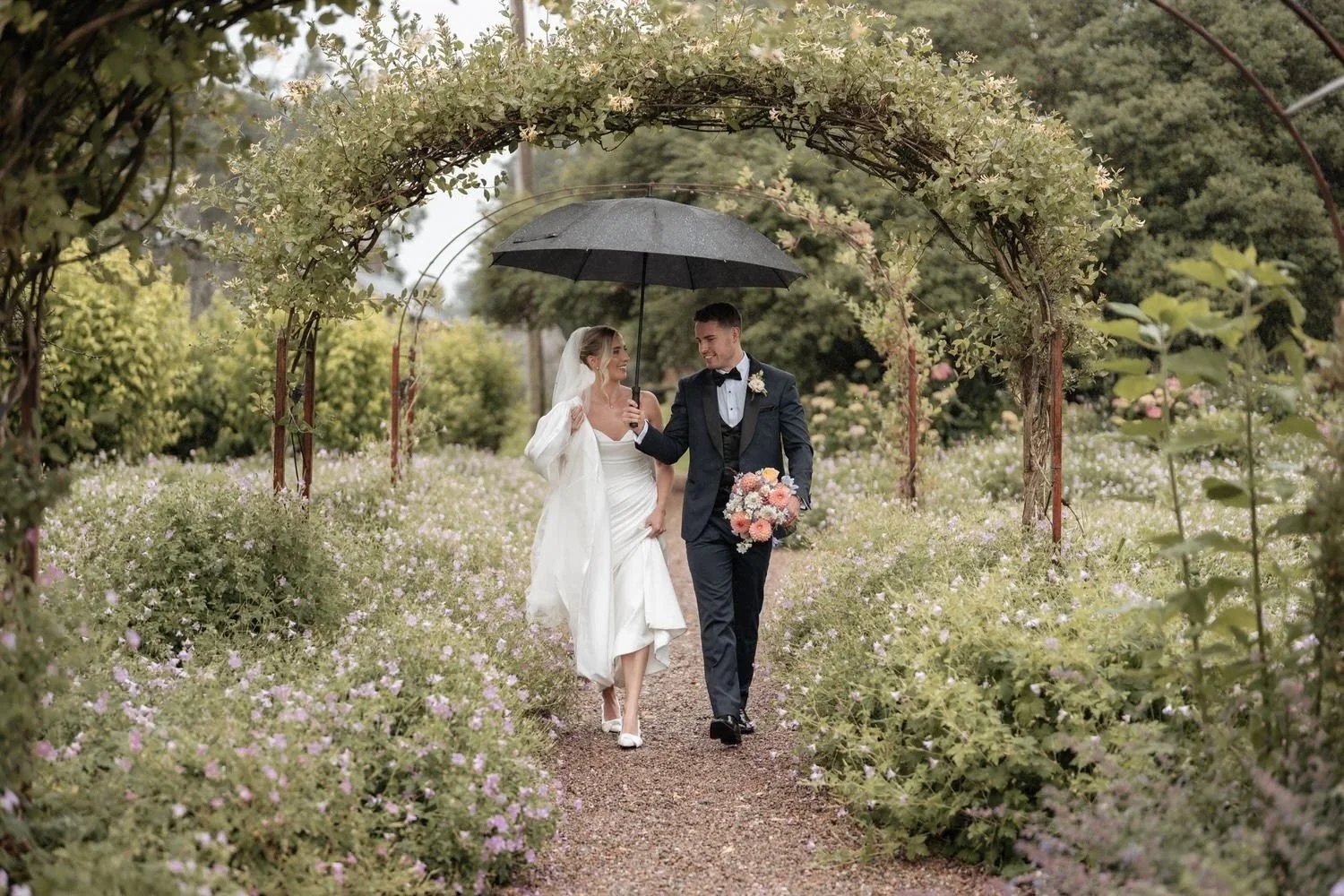
When Chloe arrived for her Orangery wedding at Larchfield Estate, the sky opened, and the rain pretty much stayed with us for the rest of the day. So Chloe and Dafydd made the most of it.
Their humanist ceremony in the Orangery felt cosy with everyone gathered in close, Dafydd's friends sang Calon Lân, and we used Larchfield's greenhouse for their portraits and all of the family photos. If we ran those photos through some of the AI tools around today, we could give them a sunny garden, dry paths and a golden hour walk across the estate that never happened. It would look lovely, and it would not be their wedding.
That is the problem with AI in wedding photography in one sentence, and it is the reason we wanted to write this post. Some of our couples have asked us where we stand on AI, so here is our answer, with no fudging.
The bigger picture
What AI is already doing to wedding photos
A lot of this has crept in quietly, so it is worth spelling out what is already possible.
Your phone is already doing it. Back in 2023 Google added a feature called Best Take to its Pixel phones. It looks through a burst of group photos, finds everyone's face, and lets you swap in each person's best expression from a different frame. So Auntie's smile might come from one shot and the best man's open eyes from another. The result is a photo of a moment that never happened, and most people using it never think twice about that.
Apps will make you a whole wedding. There are now apps that will take a couple of selfies and generate a full set of "wedding photos", complete with a dress you never wore at a venue you never visited. Others offer face swaps across whole bridal party shots so that nobody is ever caught blinking.
Well meaning "fixes" can go badly wrong. One story that did the rounds on Reddit's r/weddingshaming forum really stuck with us. A groom's uncle, a former sports photographer, took the photos at a family wedding. He felt the lighting was poor, so he ran the images through an AI editor. The faces came back unrecognisable, and in some photos the groom's face was erased entirely. Worst of all, he had saved over the originals. The couple ended up asking guests for their phone snaps just to fill an album.
The wedding industry is pushing back. In April 2026 Love My Dress, one of the biggest wedding publications in the UK, changed its submission guidelines to say it will not knowingly publish AI generated imagery. Its founder, Annabel Beeforth, followed that up in September with a longer piece on what AI imagery is costing photographers, makers and artists. When a magazine built entirely on beautiful pictures says it only wants real ones, that tells you something.
Our editing
Where we draw the line
We are not going to pretend that no software touches your photos. Every digital photo is edited in some way, and it always has been. Film photographers dodged and burned in the darkroom for the same reasons we adjust images on a screen. So it is more useful to be specific about what we do and what we never do.
What we do. We adjust colour, exposure, white balance and contrast so that skin looks like skin and a grey Northern Ireland afternoon still looks like the day you remember. We will tidy up small distractions, like a green fire exit sign glowing over your shoulder in a portrait or a stray hair tie on a wrist. All images are also colour graded in our usual style.
To be completely open, the only AI we use in our editing is what is built into Lightroom and Photoshop, such as the content aware tools, and we only use it for exactly those small fixes. It removes a spot or a sign. It never adds anything to your day or changes a moment. We have tried a few of the AI apps that are used for selecting and editing photographs, but haven't yet found one that does a better job than we do ourselves. Our favourite images often end up in black and white too, which we wrote about in why black and white wedding photography is so emotional.
What we will never do.
- Generate any part of a photo that was not in front of our cameras.
- Swap faces or expressions between frames, even in the family group photos.
- Change the shape of anyone's face or body.
- Add skies, sunsets, scenery or people that were not there.
- Deliver a single image that shows something which did not happen.
The test we use is simple. If your grandchildren pick up your album in 40 years and point at a photo, could you say "that is exactly how it was"? If the answer is no, it does not go in your gallery.
So what happens when someone blinks in the group photos? The same thing that has always happened. We take a few extra frames of every group, keep an eye on the back row and call out anyone who has wandered off to the bar. Our guide to family and bridal party group photos explains how we run that part of the day so it is quick and nobody gets missed.
Real moments
The moments a computer could never make up
Since 2014 the two of us have photographed hundreds of weddings as wedding photographers in Belfast and across Northern Ireland, and when we look back, the images couples love most are rarely the most polished ones. They are the things nobody could have planned.
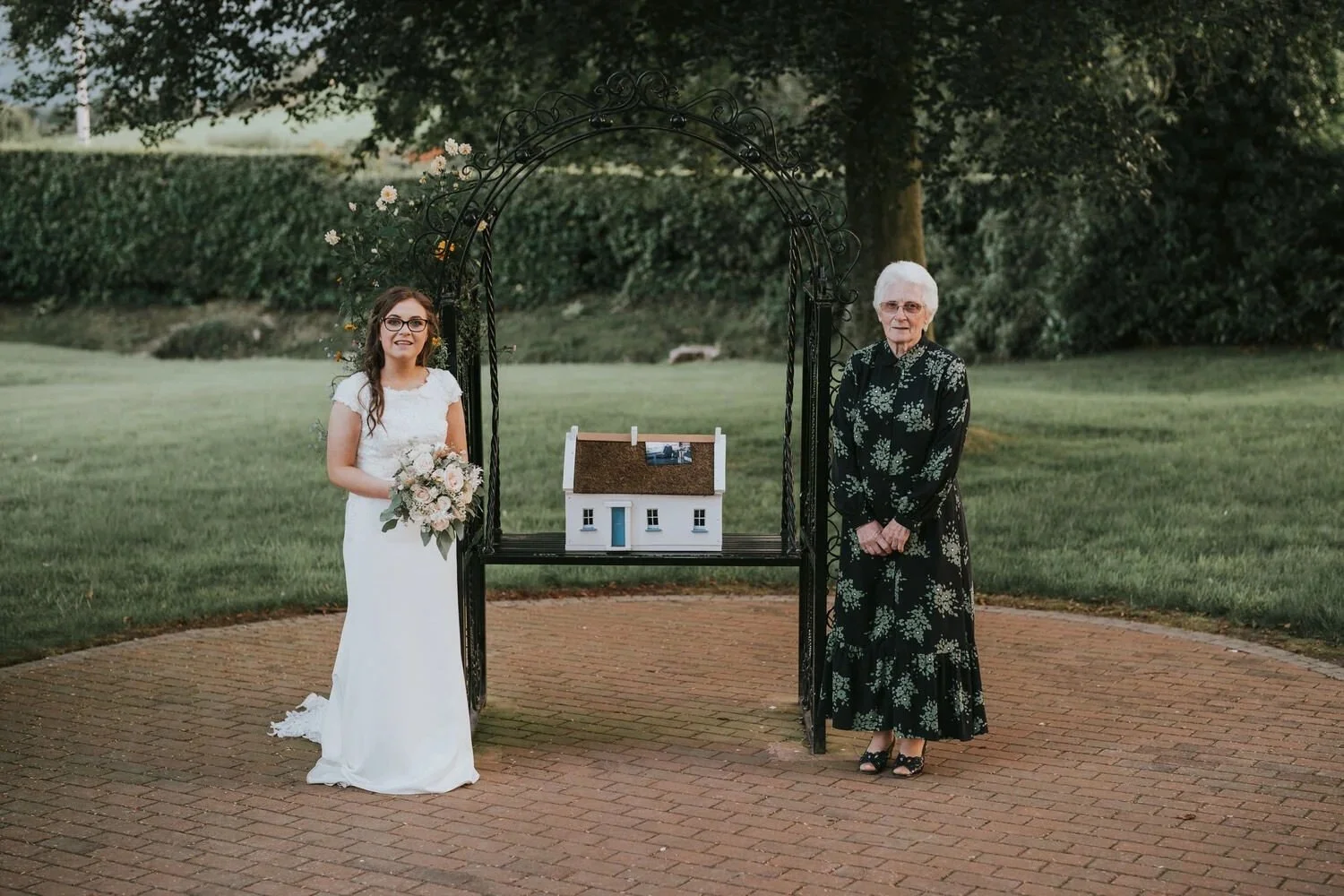
At Bethany and Andrew's wedding at the Burrendale Hotel in Newcastle, a little model cottage sat on display. It was the last thing Bethany's grandfather made before he passed away, and it was there so he was part of the day. No AI tool would know to include it, or why it mattered so much to that family.
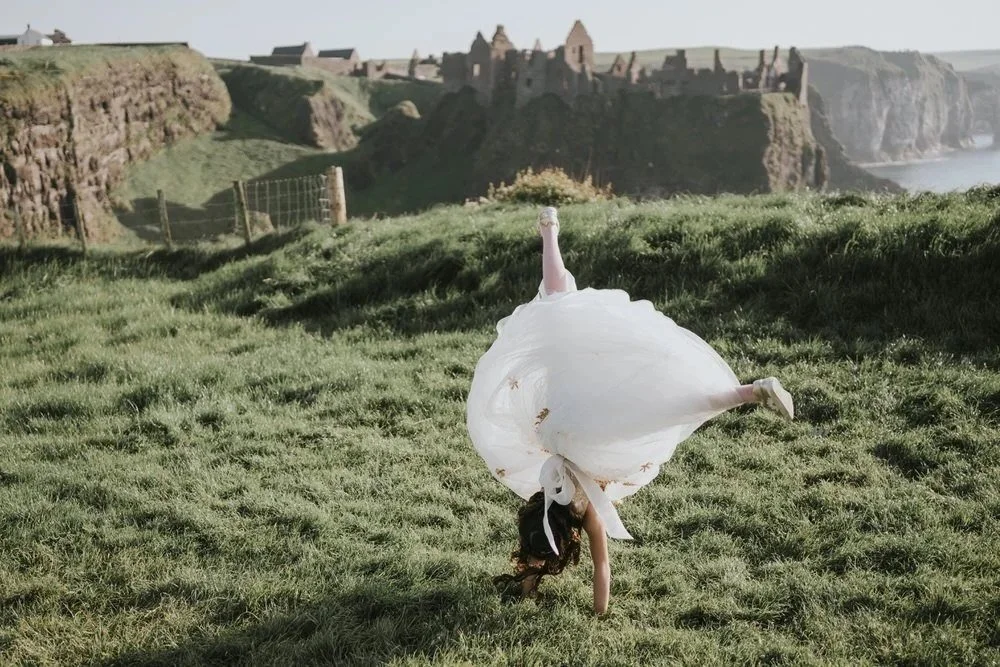
Then there was the flower girl at a Dunluce Castle elopement who decided, right in the middle of the ceremony, that it was the perfect moment for a few handstands. Nobody planned it and nobody could have, and it is the photograph the couple will love most. That elopement is more memorable because of the unexpected, not in spite of it. The real day has texture that a generated one never will. Think of the wind catching a veil or hair during a clifftop ceremony or a Dad who swore he would not cry and then did.

That is why we care so much about helping couples relax in front of the camera rather than fixing things afterwards. If you are worried about how you will look, have a read of are you nervous about photos on your wedding day? When you are comfortable, the real moments take care of themselves.
After the wedding
Why your original files matter more than ever
Back in 2014 we wrote a post called The Most Captured Generation in History. The worry then was that people were taking more photos than ever but might end up with none, because we had gone from CD to DVD to USB stick to online galleries in only a few years and older formats were already dying off.
That risk has not gone away, but AI has added a new one. It is no longer only about whether your photos survive. It is whether you can trust that they are real. The uncle on Reddit did not only ruin the images, he overwrote the originals, so there was no way back. The originals are the proof of what actually happened on your day, so it is worth asking any photographer how they look after them.
Our own advice is simple. As soon as your gallery arrives, download the full set and keep copies in at least two places, like a computer and a cloud storage account or an external hard drive. Please do not rely on any photographer, us included, to be the only place your wedding photos live. And if you would like prints or an album, our post on whether you should buy a wedding album explains why a physical copy is still one of the safest backups there is.
There is also some good news on the technology side. Camera makers have started building "Content Credentials" into their cameras. This is an open standard, known as C2PA, backed by Adobe, Google, Sony, Nikon, Canon, Leica, the BBC and others. It attaches a secure record to a photo showing where it came from and what has been done to it since. The Leica M11-P was the first camera to include it in 2023, Sony has added it to some of its Alpha cameras, and Canon launched its own system in May 2026. It is aimed at news photographers for now, but it is easy to imagine a future where couples can check that their wedding photos are the real thing.
Before you book
Questions to ask any wedding photographer about AI
Whoever you book, these are fair questions to ask before you sign a contract. Any good photographer will be happy to answer them plainly.
- Do you use AI to generate or add anything to the photos you deliver? You want a clear no.
- Do you swap faces or expressions between frames? Group photos are where this is most tempting, so ask about them specifically.
- What does your editing actually involve? Look at full galleries, not only highlights on Instagram, and ask whether they look like real days.
- How long do you keep the edited files?
- What does the contract say about how my images can be used? Our post on image usage rights and copyright covers what to look for.
Choosing a photographer
When the portfolio is not real
There is a part of the AI revolution that has impacted wedding photography more than any other, and right now it is a big problem in Northern Ireland. All over Instagram and Facebook especially, we are seeing more and more wedding photography adverts built from images that were never taken at a wedding. They are generated by AI. The couples have never existed, the venue is often a blur of castle and sunset that does not exist anywhere, and the light is flawless in a way that real light never is. Post after post, week after week, they fill your feed with a version of wedding photography that nobody can actually deliver.
It is easy to see why it happens. Generating a hundred perfect looking images using AI takes an afternoon, while building a real portfolio takes years of early mornings, bad weather, tricky rooms and long days on your feet. For anyone starting out and trying to fake it until they make it, or short on time, the shortcut is probably tempting. We have also seen many long standing wedding photographers in Northern Ireland doing this, some on almost a daily basis.
As photographers, we know what to look for. We notice hands that are slightly wrong, faces that repeat from one image to the next, light that comes from nowhere and venues that do not quite add up. But it must be extremely difficult for a couple. You are scrolling on your phone, the images are beautiful, and nothing tells you they are not real. You fall in love with a style, you book, and you have no way of knowing that the photographs you were shown are not the photographs you will get.
That gap shows up on the wedding day. A generated image never had to deal with a dark church, a harsh midday sun or a ceremony that ran twenty minutes late. It never had to find a flower girl who has run off, or a groom who is crying in the middle of the vows. A photographer who has built their marketing on images like these has often never had to solve any of those problems on a real day, so when the real wedding arrives, the results can look nothing like the adverts. The couple were shown one thing and received another, and by then the day cannot be repeated.
This is not a new principle. The Advertising Standards Authority has been clear that an image created with AI can still mislead if it does not fairly show what a product or service can deliver. How an advert was made does not change how a customer reads it.
So how do you protect yourself? Ask to see a full range of images from real weddings, not just a few photos from an Instagram carousel. Look for the same couple, in the same venue, from getting ready to the dancing. Check whether the portfolio includes dull weather, crowded rooms and imperfect moments, because every real wedding has them. Read reviews that mention the photographer by name and the venue. If possible view images on a large screen rather than your phone, sometimes it can be very obvious on a larger screen what is real and what is not.
That is exactly why we have a real weddings gallery for anyone to browse. Every photograph in it was taken at a real wedding, for a real couple, and you can follow whole days from start to finish. We would rather show you a rainy day that is true than a perfect one that is not.
In short
Our promise
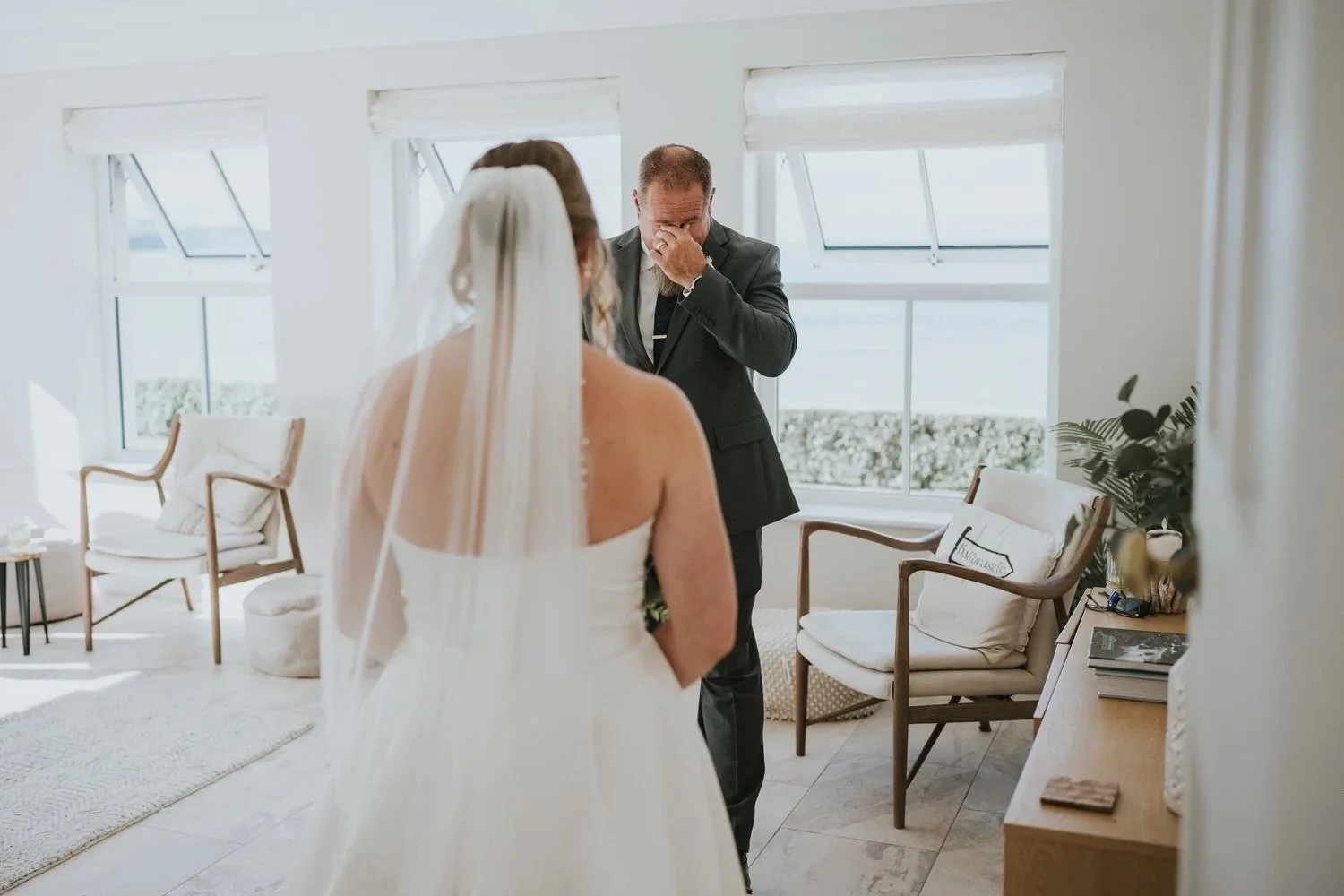
New tools will keep arriving every year, and some of them are useful for the boring side of running a business and we will most definitely use any AI tool that can help make the admin of running a small business easier. But the photos we hand you will always be a true record of your day. The rain stays in. The imperfect moments will always stay in. The little cottage that stood in for a much loved grandfather stays in. So does the Dad who could not hold back the tears the moment he saw his daughter in her dress, which is one of the reasons we love a first look with your Dad. We will never create completely fake and often misleading content for social media.
Before you go
If you want to see what that looks like across a whole day, have a look through our real weddings, or read a bit more about us. And if you are planning a wedding in Northern Ireland and want every moment to be exactly as it happened, get in touch to check if we are free for your date.
Keep reading
More wedding planning guides
If you are in the middle of planning your wedding you might also find these articles helpful.
When Chloe arrived for her Orangery wedding at Larchfield Estate, the sky opened, and the rain pretty much stayed with us for the rest of the day. So Chloe and Dafydd made the most of it. Their humanist ceremony in the Orangery felt cosy with everyone gathered in close, Dafydd's friends sang Calon Lân, and we used Larchfield's greenhouse for their portraits and all of the family photos. If we ran those photos through some of the AI tools around today, we could give them a sunny garden, dry paths and a golden hour walk across the estate that never happened. It would look lovely, and it would not be their wedding. That is the problem with AI in wedding photography in one sentence, and it is the reason we wanted to write this post. Some of our couples have asked us where we stand on AI, so here is our answer, with no fudging.
What AI is already doing to wedding photos
A lot of this has crept in quietly, so it is worth spelling out what is already possible.
Your phone is already doing it. Back in 2023 Google added a feature called Best Take to its Pixel phones. It looks through a burst of group photos, finds everyone's face, and lets you swap in each person's best expression from a different frame. So Auntie's smile might come from one shot and the best man's open eyes from another. The result is a photo of a moment that never happened, and most people using it never think twice about that.
Apps will make you a whole wedding. There are now apps that will take a couple of selfies and generate a full set of "wedding photos", complete with a dress you never wore at a venue you never visited. Others offer face swaps across whole bridal party shots so that nobody is ever caught blinking.
Well meaning "fixes" can go badly wrong. One story that did the rounds on Reddit's r/weddingshaming forum really stuck with us. A groom's uncle, a former sports photographer, took the photos at a family wedding. He felt the lighting was poor, so he ran the images through an AI editor. The faces came back unrecognisable, and in some photos the groom's face was erased entirely. Worst of all, he had saved over the originals. The couple ended up asking guests for their phone snaps just to fill an album.
The wedding industry is pushing back. In April 2026 Love My Dress, one of the biggest wedding publications in the UK, changed its submission guidelines to say it will not knowingly publish AI generated imagery. Its founder, Annabel Beeforth, followed that up in September with a longer piece on what AI imagery is costing photographers, makers and artists. When a magazine built entirely on beautiful pictures says it only wants real ones, that tells you something.
Where we draw the line
We are not going to pretend that no software touches your photos. Every digital photo is edited in some way, and it always has been. Film photographers dodged and burned in the darkroom for the same reasons we adjust images on a screen. So it is more useful to be specific about what we do and what we never do.
What we do. We adjust colour, exposure, white balance and contrast so that skin looks like skin and a grey Northern Ireland afternoon still looks like the day you remember. We will tidy up small distractions, like a green fire exit sign glowing over your shoulder in a portrait or a stray hair tie on a wrist. All images are also colour graded in our usual style.
To be completely open, the only AI we use in our editing is what is built into Lightroom and Photoshop, such as the content aware tools, and we only use it for exactly those small fixes. It removes a spot or a sign. It never adds anything to your day or changes a moment. We have tried a few of the AI apps that are used for selecting and editing photographs, but haven’t yet found one that does a better job than we do ourselves. Our favourite images often end up in black and white too, which we wrote about in why black and white wedding photography is so emotional.
What we will never do.
Generate any part of a photo that was not in front of our cameras.
Swap faces or expressions between frames, even in the family group photos.
Change the shape of anyone's face or body.
Add skies, sunsets, scenery or people that were not there.
Deliver a single image that shows something which did not happen.
The test we use is simple. If your grandchildren pick up your album in 40 years and point at a photo, could you say "that is exactly how it was"? If the answer is no, it does not go in your gallery.
So what happens when someone blinks in the group photos? The same thing that has always happened. We take a few extra frames of every group, keep an eye on the back row and call out anyone who has wandered off to the bar. Our guide to family and bridal party group photos explains how we run that part of the day so it is quick and nobody gets missed.
The moments a computer could never make up
Since 2014 the two of us have photographed hundreds of weddings across Northern Ireland, and when we look back, the images couples love most are rarely the most polished ones. They are the things nobody could have planned.
At Bethany and Andrew's wedding at the Burrendale Hotel in Newcastle, a little model cottage sat on display. It was the last thing Bethany's grandfather made before he passed away, and it was there so he was part of the day. No AI tool would know to include it, or why it mattered so much to that family.
Then there was the flower girl at a Dunluce Castle elopement who decided, right in the middle of the ceremony, that it was the perfect moment for a few handstands. Nobody planned it and nobody could have, and it is the photograph the couple will love most. That elopement is more memorable because of the unexpected, not in spite of it. The real day has texture that a generated one never will. Think of the wind catching a veil or hair during a clifftop ceremony or a Dad who swore he would not cry and then did.”
That is why we care so much about helping couples relax in front of the camera rather than fixing things afterwards. If you are worried about how you will look, have a read of are you nervous about photos on your wedding day? When you are comfortable, the real moments take care of themselves.
Why your original files matter more than ever
Back in 2014 we wrote a post called The Most Captured Generation in History. The worry then was that people were taking more photos than ever but might end up with none, because we had gone from CD to DVD to USB stick to online galleries in only a few years and older formats were already dying off.
That risk has not gone away, but AI has added a new one. It is no longer only about whether your photos survive. It is whether you can trust that they are real. The uncle on Reddit did not only ruin the images, he overwrote the originals, so there was no way back. The originals are the proof of what actually happened on your day, so it is worth asking any photographer how they look after them.
Our own advice is simple. As soon as your gallery arrives, download the full set and keep copies in at least two places, like a computer and a cloud storage account or an external hard drive. Please do not rely on any photographer, us included, to be the only place your wedding photos live. And if you would like prints or an album, our post on whether you should buy a wedding album explains why a physical copy is still one of the safest backups there is.
There is also some good news on the technology side. Camera makers have started building "Content Credentials" into their cameras. This is an open standard, known as C2PA, backed by Adobe, Google, Sony, Nikon, Canon, Leica, the BBC and others. It attaches a secure record to a photo showing where it came from and what has been done to it since. The Leica M11-P was the first camera to include it in 2023, Sony has added it to some of its Alpha cameras, and Canon launched its own system in May 2026. It is aimed at news photographers for now, but it is easy to imagine a future where couples can check that their wedding photos are the real thing.
Questions to ask any wedding photographer about AI
Whoever you book, these are fair questions to ask before you sign a contract. Any good photographer will be happy to answer them plainly.
Do you use AI to generate or add anything to the photos you deliver? You want a clear no.
Do you swap faces or expressions between frames? Group photos are where this is most tempting, so ask about them specifically.
What does your editing actually involve? Look at full galleries, not only highlights on Instagram, and ask whether they look like real days.
How long do you keep the edited files?
What does the contract say about how my images can be used? Our post on image usage rights and copyright covers what to look for.
When the portfolio is not real
There is a part of the AI revolution that has impacted wedding photography more than any other, and right now it is a big problem in Northern Ireland. All over Instagram and Facebook especially, we are seeing more and more wedding photography adverts built from images that were never taken at a wedding. They are generated by AI. The couples have never existed, the venue is often a blur of castle and sunset that does not exist anywhere, and the light is flawless in a way that real light never is. Post after post, week after week, they fill your feed with a version of wedding photography that nobody can actually deliver.
It is easy to see why it happens. Generating a hundred perfect looking images using AI takes an afternoon, while building a real portfolio takes years of early mornings, bad weather, tricky rooms and long days on your feet. For anyone starting out and trying to fake it until they make it, or short on time, the shortcut is probably tempting. We have also seen many long standing wedding photographers in Northern Ireland doing this, some on almost a daily basis.
As photographers, we know what to look for. We notice hands that are slightly wrong, faces that repeat from one image to the next, light that comes from nowhere and venues that do not quite add up. But it must be extremely difficult for a couple. You are scrolling on your phone, the images are beautiful, and nothing tells you they are not real. You fall in love with a style, you book, and you have no way of knowing that the photographs you were shown are not the photographs you will get.
That gap shows up on the wedding day. A generated image never had to deal with a dark church, a harsh midday sun or a ceremony that ran twenty minutes late. It never had to find a flower girl who has run off, or a groom who is crying in the middle of the vows. A photographer who has built their marketing on images like these has often never had to solve any of those problems on a real day, so when the real wedding arrives, the results can look nothing like the adverts. The couple were shown one thing and received another, and by then the day cannot be repeated.
This is not a new principle. The Advertising Standards Authority has been clear that an image created with AI can still mislead if it does not fairly show what a product or service can deliver. How an advert was made does not change how a customer reads it.
So how do you protect yourself? Ask to see a full range of images from real weddings, not not just a few photos from an instagram carousel. Look for the same couple, in the same venue, from getting ready to the dancing. Check whether the portfolio includes dull weather, crowded rooms and imperfect moments, because every real wedding has them. Read reviews that mention the photographer by name and the venue. If possible view images on a large screen rather than your phone, sometimes it can be very obvious on a larger screen what is real and what is not.
That is exactly why we have a real weddings gallery for anyone to browse. Every photograph in it was taken at a real wedding, for a real couple, and you can follow whole days from start to finish. We would rather show you a rainy day that is true than a perfect one that is not.
Our promise
New tools will keep arriving every year, and some of them are useful for the boring side of running a business and we will most definitely use any AI tool that can help make the admin of running a small business easier. But the photos we hand you will always be a true record of your day. The rain stays in. The imperfect moments will always stay in. The little cottage that stood in for a much loved grandfather stays in. We will never create completely fake and often misleading content for social media.
If you want to see what that looks like across a whole day, have a look through our real weddings, or read a bit more about us. And if you are planning a wedding in Northern Ireland and want every moment to be exactly as it happened, get in touch to check if we are free for your date.