
Handfasting Ceremony: A Timeless Tradition of Love and Unity
The handfasting ceremony or “tying the knot” as it’s also known is an ancient and beautiful tradition that has been experiencing a revival in recent years. Originating from the rich and ancient Celtic culture, this beautiful and meaningful ritual symbolises the deep connection and commitment shared between two individuals, mirroring the cherished tradition of exchanging rings that we see in contemporary weddings today.
History and Origins of Handfasting
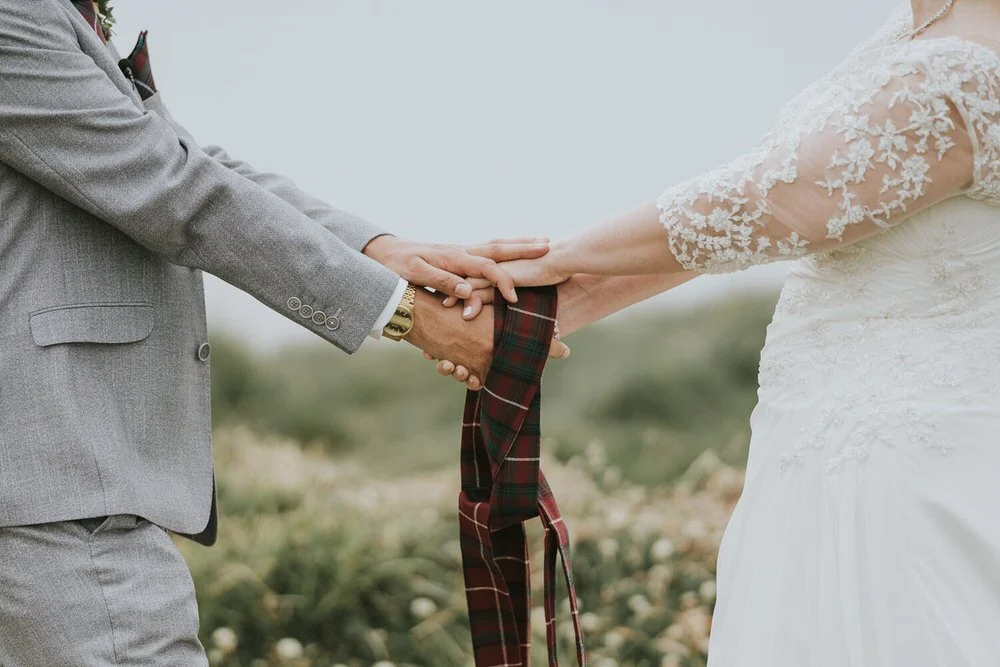
Handfasting dates back to pre-Christian times and was widely practiced across the British Isles, especially in Scotland and Ireland. In the Middle Ages, it was considered a legitimate way to formalise a betrothal or marriage before the church’s influence became predominant. Couples would have their hands bound together with a cord or ribbon, signifying their union.
Cultural Significance
In many ancient cultures, handfasting was more than just a marriage ritual, it was a sacred act that invoked the blessings of the gods and nature. The Celts viewed the earth and its elements as vital forces in life. Binding the couple’s hands together was a symbolic way of connecting them to these elemental forces and ensuring that the gods favoured their union.
Resurgence in Modern Times
Today, handfasting is enjoying renewed popularity among couples seeking a more personalised and spiritually meaningful wedding. It's often integrated into modern ceremonies as a nod to heritage or as a unique alternative to traditional vows. Whether you're planning a pagan, spiritual, or secular wedding, handfasting can add a profound touch to your ceremony. It has become especially popular during Humanist wedding ceremonies in Northern Ireland.
The Symbolism of Handfasting
The Traditional Cord or Ribbon
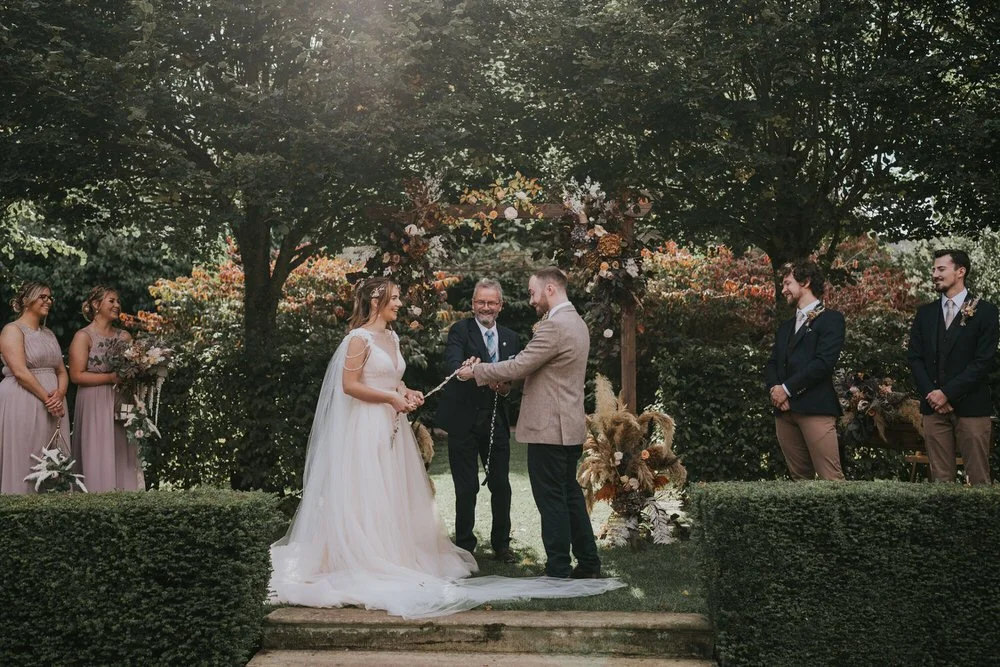
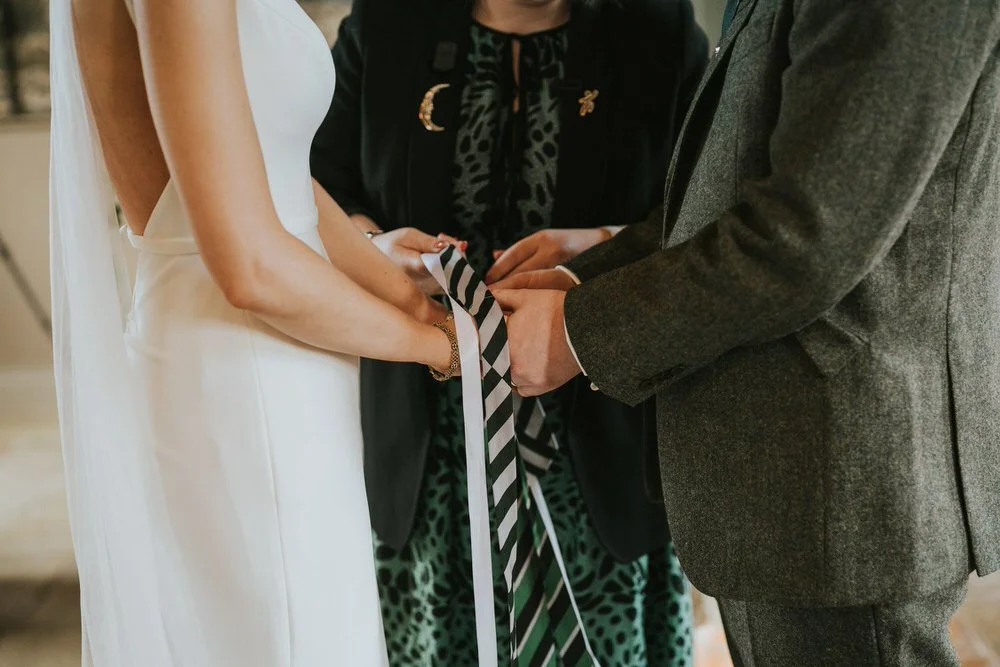
The cord or ribbon used in handfasting ceremonies is not merely a decorative element, it carries deep symbolic weight. Traditionally, the cord could be made from various materials, including wool, leather, or silk. Today, couples often choose ribbons that reflect their personalities, favourite colours, or cultural backgrounds. We have photographed weddings were couples have used items of personal value to them like their old school ties.
Colours traditionally played a significant role in handfasting cords, each hue representing different aspects of the couple’s relationship:
Red symbolises passion and strength.
Blue stands for fidelity and trust.
Green signifies fertility and prosperity.
Gold represents wisdom and longevity.
The Act of Binding
The physical act of binding the hands is a powerful symbol of unity and commitment. By intertwining their hands and wrapping them with a cord, the couple demonstrates their willingness to join their lives together. This act represents their promise to support and love each other, sharing life’s joys and challenges as one.
Planning Your Handfasting Ceremony
Choosing the Right Cord or Ribbon
Selecting a cord or ribbon for your handfasting ceremony involves more than just picking a color. Consider the following factors:
Material: Choose a material that feels significant to you. Whether it’s a piece of lace from a family heirloom, a strand of natural hemp, or a luxurious silk ribbon, the choice should resonate with your values and story.
Length: The cord should be long enough to wrap around your joined hands multiple times, typically between 6 to 9 feet.
Customisation: Personalise your cord with charms, beads, or embroidery that tells a story about your relationship or shared interests.
Writing Your Vows
Handfasting ceremonies often include personalised vows. This is an opportunity to express your commitment and love in your own words. You can write individual vows or collaborate on a unified promise. Either way, ensure that your words reflect the deep bond and shared values that brought you together.
Selecting the Right Officiant
The person officiating your handfasting ceremony plays a crucial role in its execution. Whether you choose a spiritual leader, a close friend, or a professional celebrant or humanist, make sure they are comfortable and knowledgeable about the handfasting ritual. Discuss the ceremony in detail with them to ensure it aligns with your vision and values.
Conducting the Ceremony
Setting the Scene
A handfasting ceremony can be performed in any setting, from a serene forest glade to a traditional church or chapel. The location should feel meaningful to you and set the right atmosphere for the ritual. Consider the following elements to enhance the ambiance:
Decorations: Use natural elements like flowers, stones, and candles to create a sacred space.
Music: Choose music that resonates with the theme of your ceremony. Traditional Celtic music or instrumental pieces can add a timeless touch.
Participants: Decide if you want to involve family members or friends in the ritual, such as having them present the cord or hold special symbols during the ceremony.
The Ritual Steps
Opening the Ceremony: The officiant begins with an introduction, explaining the significance of handfasting and its place in your ceremony.
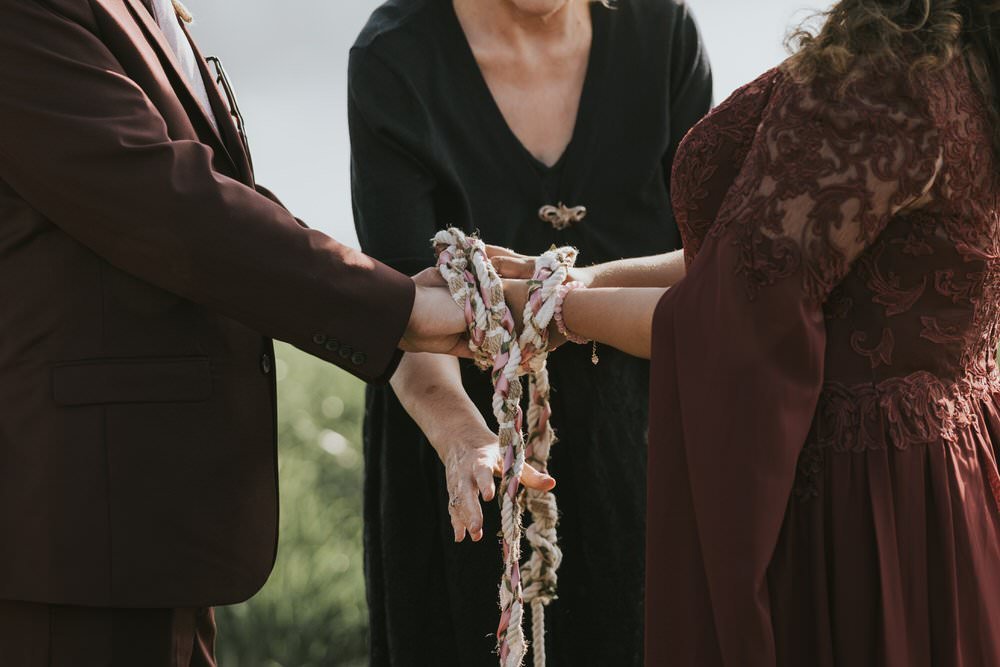
Binding the Hands: The couple joins hands, and the officiant wraps the cord around their hands, typically in a figure-eight pattern, representing infinity and eternal love.
Reciting Vows: As the hands are bound, the couple recites their vows, pledging their love and commitment.
Securing the Knot: After the vows, the cord is tied into a knot, symbolizing the sealing of their promises.
Blessing the Union: The officiant may offer a blessing, invoking positive energies or spiritual forces to support the couple’s marriage.
Including Family and Friends
Handfasting ceremonies can be deeply intimate or involve close friends and family. Consider including the following elements to engage your loved ones:
Witnessing the Binding: Ask a few significant people to stand close and witness the binding of hands.
Offering Blessings: Invite family members to offer their blessings or share a reading.
Tying Additional Knots: You can have friends or family tie additional knots in the cord, each representing their support and good wishes for your union.
Incorporating Handfasting into Your Wedding
Handfasting can be the central focus of your wedding ceremony or a beautiful addition to traditional elements. Here’s how you can seamlessly integrate it:
Standalone Ceremony
If you want handfasting to be the highlight of your wedding, consider dedicating a significant portion of your ceremony to this ritual. This allows for a deep exploration of its symbolism and a memorable moment for both you and your guests.
Blending with Modern Traditions
Handfasting can complement other wedding traditions like the exchange of rings or lighting a unity candle. You might begin with the handfasting ritual and follow it with modern vows and the ring exchange, creating a bridge between ancient customs and contemporary practices.
Reception Elements
Extend the theme of handfasting into your reception:
Decor: Use handfasting cords as table centerpieces or to decorate your cake.
Activities: Consider having a cord-making station where guests can create their own small knots as keepsakes.
Favors: Provide mini cords or ribbons as wedding favours, symbolizing your handfasting ceremony.
A handfasting ceremony is a deeply personal and profoundly symbolic way to celebrate your union. By embracing this ancient tradition, you create a meaningful connection to history while forging a unique path for your future together. Whether you choose to keep it simple or embellish it with modern touches, handfasting will undoubtedly add a rich layer of significance to your wedding day.
If you would like to find out more about other wedding traditions you might also find these articles helpful.
WEDDING TRADITIONS: THE WEDDING FLOWERS
WEDDING TRADITIONS: THE CUTTING OF THE WEDDING CAKE
WEDDING TRADITIONS: THE BRIDAL PARTY