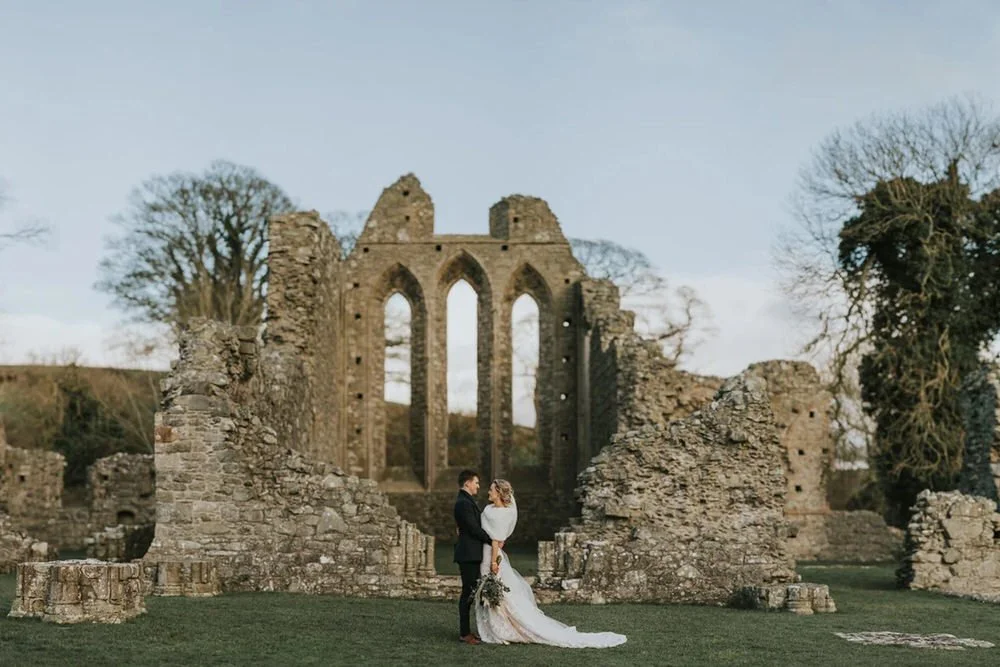
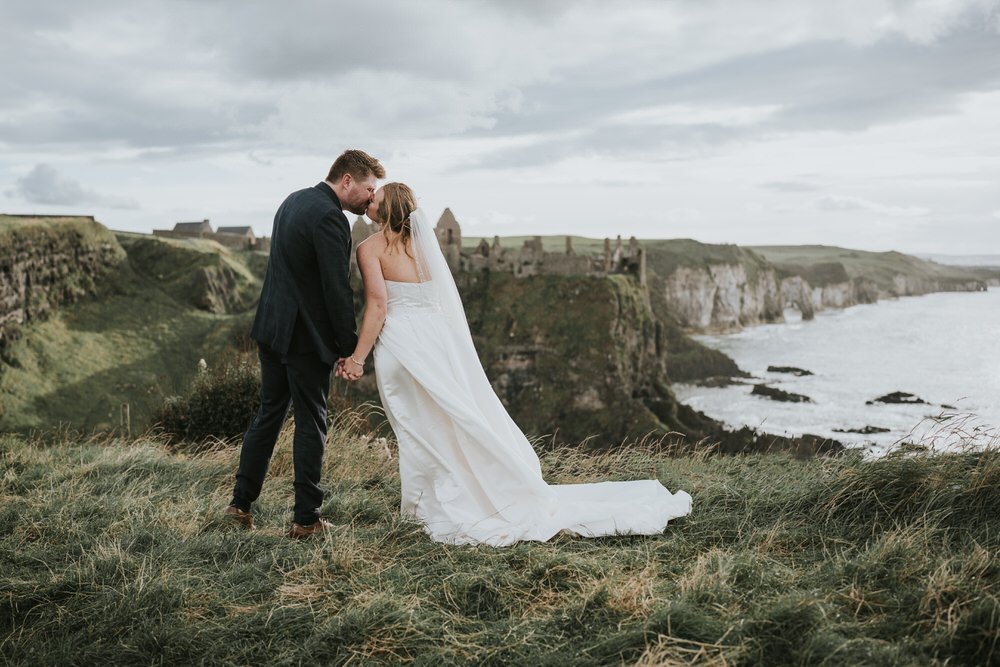
Lost in Time: Wedding Photography Among Northern Ireland’s Ancient Ruins
Ruins and romance
Dreaming of stone walls instead of a hotel garden?
Northern Ireland offers far more than scenic landscapes for your wedding photographs. Among the rugged coastline and rolling green fields, ancient castles, abbeys and crumbling stone walls stand as silent witnesses to time. Every archway, courtyard and moss covered wall tells a story, and that can deepen the emotion of your day.
We are Tommy and Laurene, an award winning husband and wife team of wedding photographers in Northern Ireland, and we work regularly in these places. This guide shares four ruins we love, what makes each one special, and the practical things couples often miss, including permission. We last updated it in November 2026.
The short version
Ruins we love
Two coastal castles and two quiet abbeys, each with its own mood.
Working days notice
This is the minimum for wedding photography at state care monuments.
Before sunset
Golden hour gives the best light and often fewer visitors.
Your options
Three ways to choose your ruin
Dramatic and wild
Coastal castles
- Dunluce Castle on the Antrim cliffs
- Dunseverick Castle near the Causeway Coast
- Wind, waves and big skies
Calm and romantic
Quiet abbeys
- Inch Abbey beside the River Quoile
- Grey Abbey on the Ards Peninsula
- Soft arches, greenery and privacy
Before you go
Plan ahead
- Ask permission early
- Check weather, footwear and travel time
- Aim for early or late light
Why ruins
Why ancient ruins make perfect wedding locations
Ruins feel both intimate and dramatic. They offer settings that cannot be recreated in the grounds of a hotel or a garden, with dramatic backdrops, shifting light and textures carved by centuries. For couples looking beyond the usual wedding photo locations, they give a chance to step into history while marking a new beginning.
Contrast that mirrors marriage
Ruins are strong yet fragile, weathered yet elegant. That balance echoes commitment alongside vulnerability and strength alongside tenderness.
Versatile backdrops
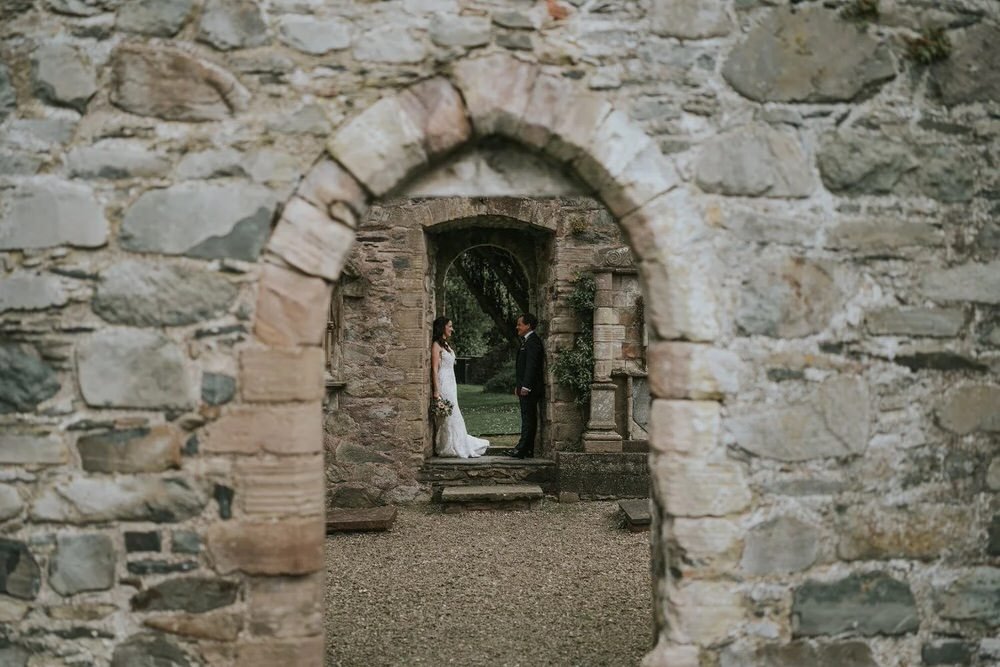
Wide stone courtyards frame group portraits, while archways and narrow staircases highlight the two of you in more personal moments.
Texture in every frame
Moss, ivy and uneven stone make each photograph feel naturally layered.
Scale and detail
Wide shots show the grandeur of a castle, while close ups pick out the details. It gives us real creative freedom to tell your story from many angles.
Light plays a major role too. Shadows move across broken walls through the day and add depth. Golden hour can bathe the stone in a warm glow, while overcast skies bring a dramatic mood. Ruins also stand for endurance and lasting presence, qualities many couples hope to reflect in their own marriage.
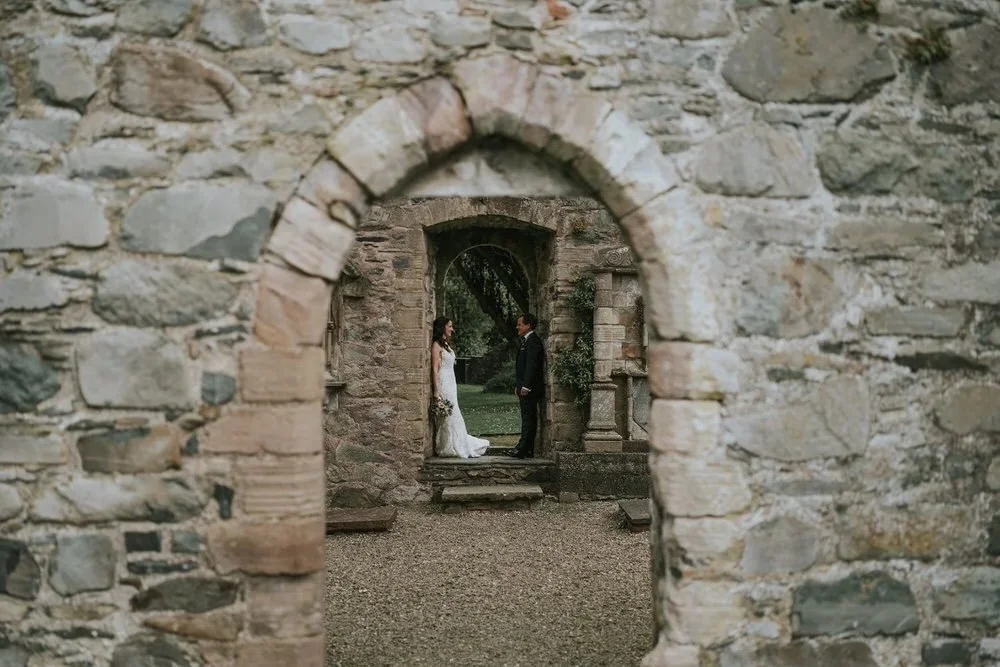
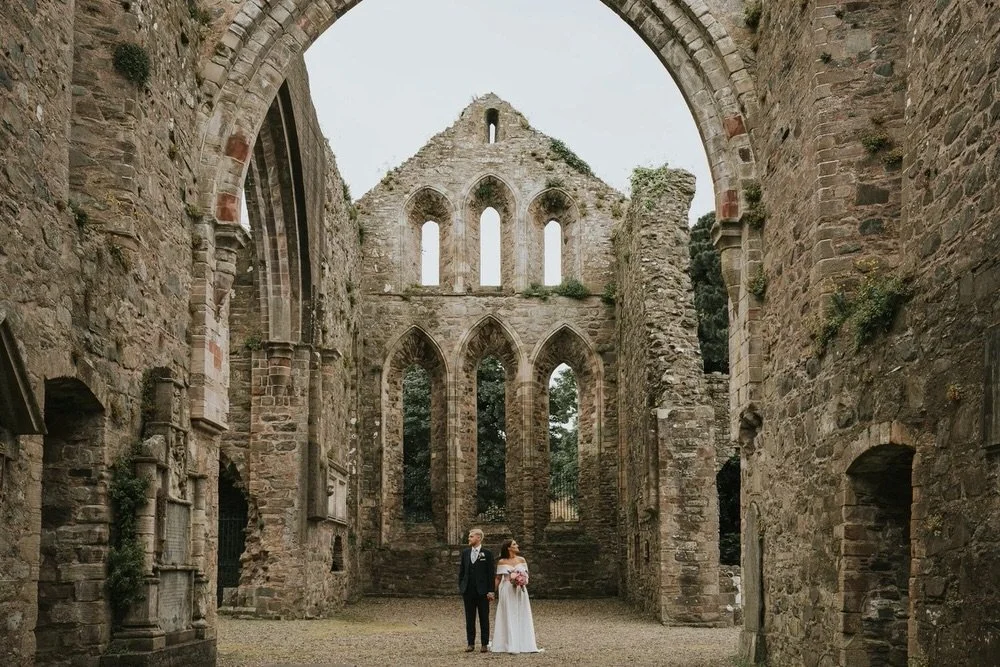
Dunluce Castle
Dunluce Castle, wild and cinematic
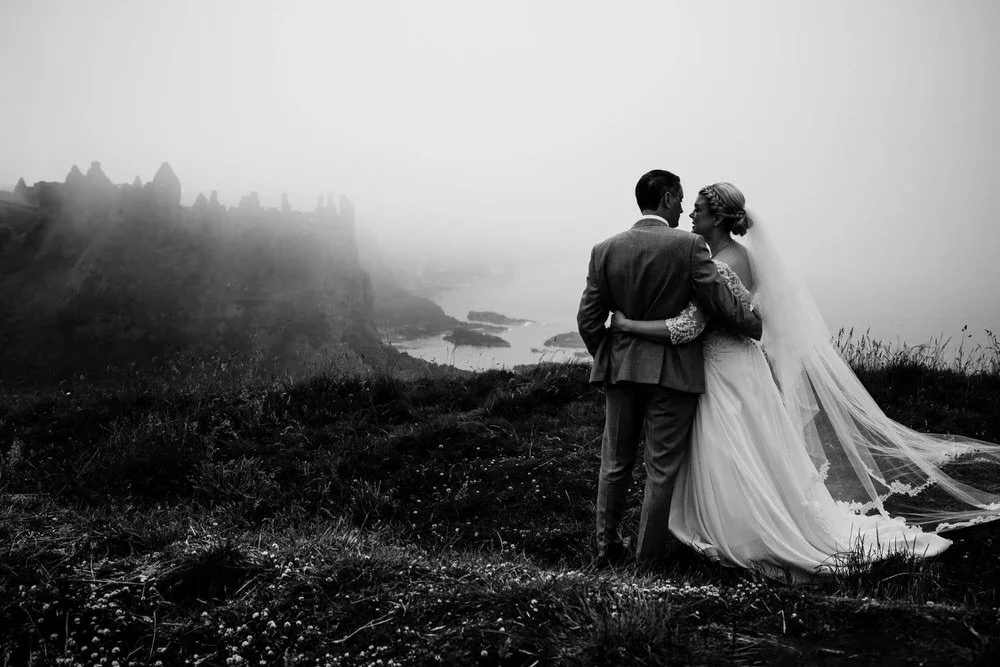
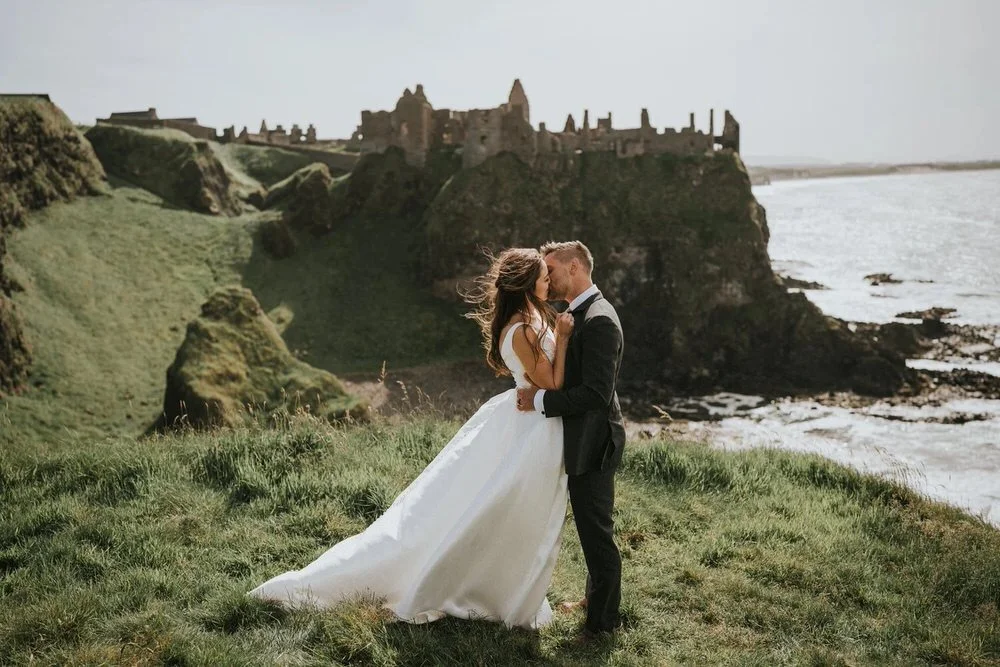
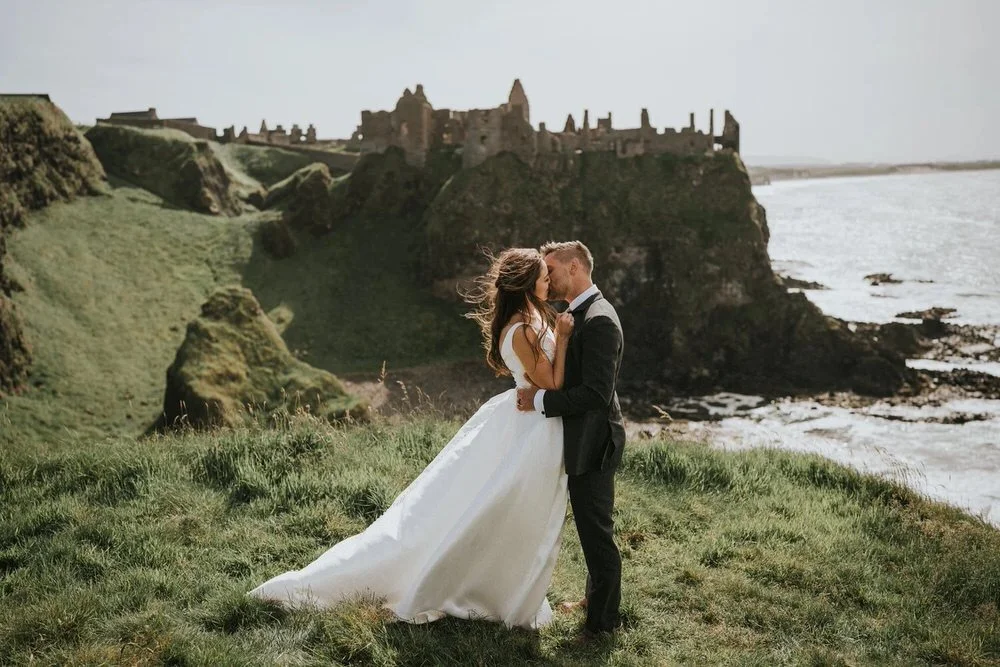
Dunluce Castle stands dramatically on the cliffs of County Antrim, with its ruins overlooking the sea. According to the Department for Communities, the MacQuillan family first built it around 1500, and the castle kitchens fell into the sea during a stormy night in 1639. Couples often choose it for the cinematic setting, with stone walls and towers above crashing waves.
The mix of ocean and ruin gives us plenty of variety, from wide coastal panoramas to close portraits against ancient walls. It is important to plan around weather and high winds here, but those elements often add energy to your photographs, with movement in veils, dresses and skies. For adventurous couples, Dunluce captures both the wild spirit of the coast and the romance of history.
Dunluce is looked after by the Department for Communities, so read the permission section further down before you plan a photo session here. You can read more on the official Dunluce Castle page.
Dunseverick Castle
Dunseverick Castle, raw and private
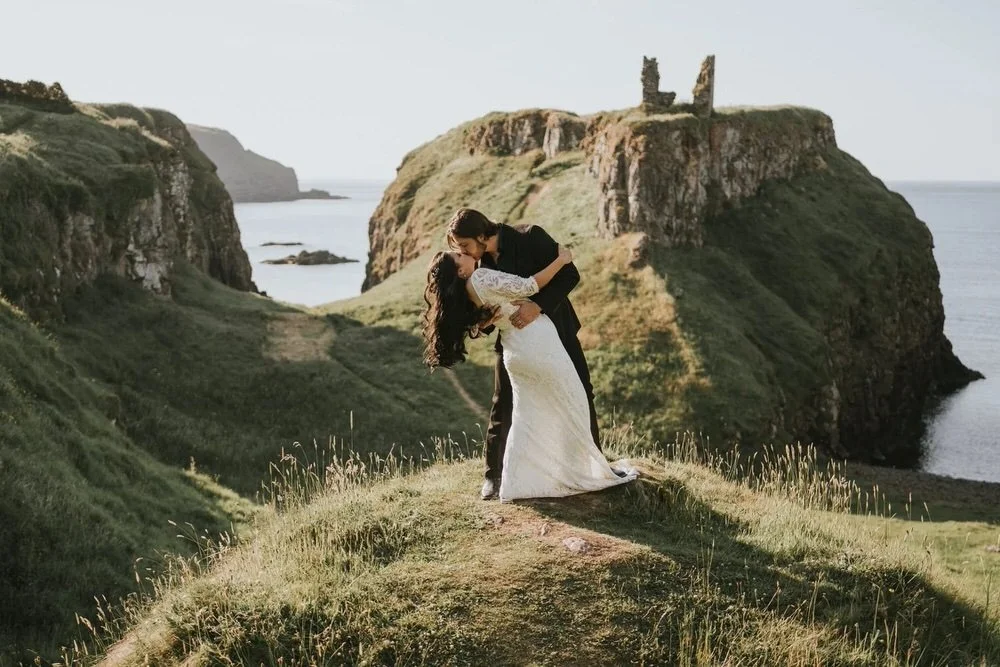
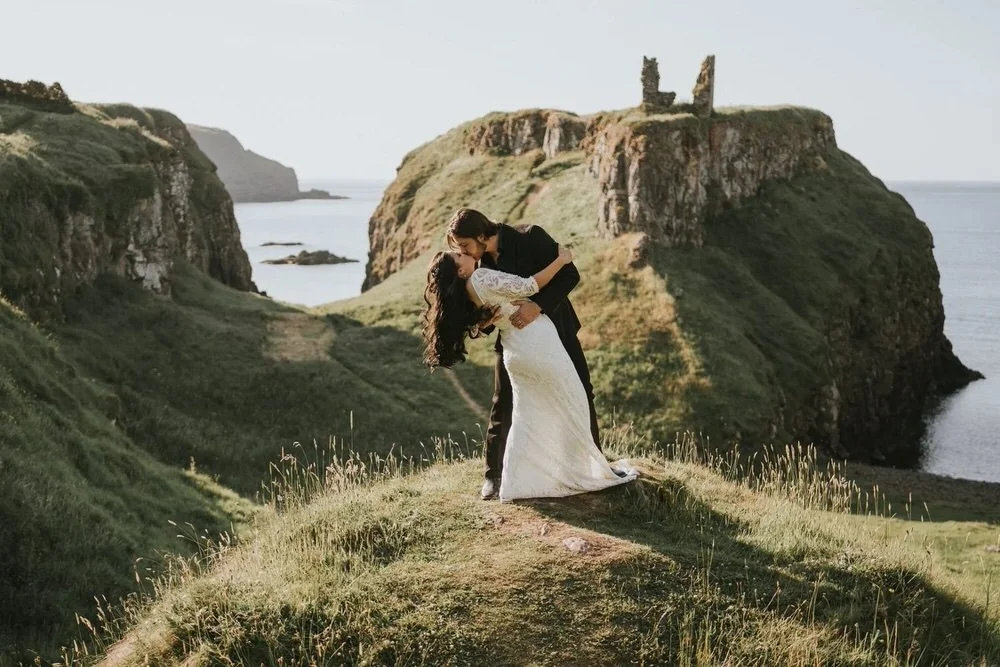
Dunseverick Castle sits near the edge of the Causeway Coast, and today only a few remains are left. What it lacks in size it makes up for in its dramatic setting. The National Trust describes a small masonry tower on a basalt stack above rugged cliffs, with sweeping views of the Atlantic Ocean and a history that stretches back over a thousand years.
We often use Dunseverick as a location for elopement photography. We try to show the cliffs, the sea and the castle remains together, which gives photographs that feel both romantic and raw. The simplicity of the site lets the landscape take centre stage.
Because it is less visited than Dunluce, Dunseverick also offers more privacy. You can share quiet moments without distraction, while still enjoying one of the most dramatic coastlines in Northern Ireland. Check access with the National Trust Dunseverick Castle page before you go. If you are planning an elopement, our guide to choosing an elopement photographer and our page on the cost to elope in Northern Ireland can help.
Inch Abbey
Inch Abbey, peaceful and reflective
Inch Abbey near Downpatrick is a Gothic style ruin with open stone walls and tall archways, set beside the River Quoile. The Department for Communities says it was founded by John de Courcy, with buildings mainly from the 12th and 13th centuries, and that entry is free. The riverside setting gives it a peaceful, reflective quality.
The dramatic arches and tall walls frame couples beautifully. We like the contrast between stone and greenery, and the variety the site offers, from sweeping photographs of the abbey to softer images by the water’s edge. Because of its open structure, it also benefits from natural light throughout the day.
Public access is sometimes restricted due to works, so check before you visit on the official Inch Abbey page.
Grey Abbey
Grey Abbey, quiet and romantic
Grey Abbey on the Ards Peninsula is quieter than many other ruins, which makes it a lovely choice for couples who want privacy. The Department for Communities records that it was founded in 1193 by Affreca, wife of John de Courcy, and that the remains lie in the parkland of Rosemount House, with a church, a cloister and buildings to the south.
The medieval arches and grassy interior give it a softer, more romantic feel than the cliffside castles. Flowers and ivy often grow along the stone and add seasonal variety to your photographs. We value Grey Abbey for its balance, because it combines historical presence with a calm, intimate setting.
The seasons each bring something. In spring and summer flowers bloom against the stone, autumn adds golden tones, and even in winter the abbey has a stark beauty that suits couples who like a minimalist, atmospheric look. Check opening details on the official Grey Abbey page.
Light and weather
Plan for light and weather
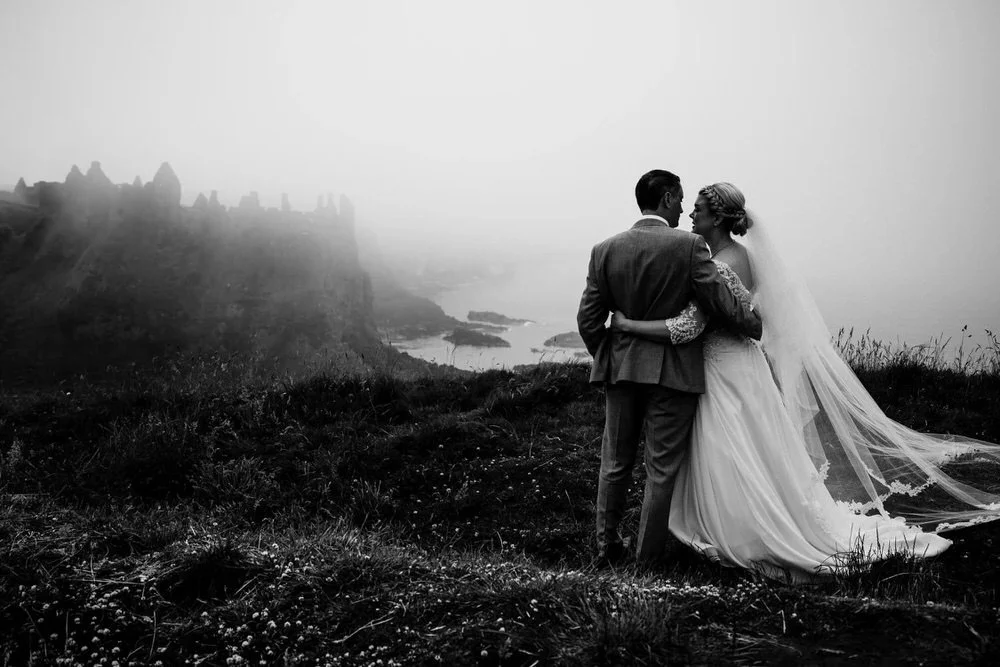
Northern Ireland weather is unpredictable, so prepare for changing light, sudden rain and wind. Always bring an umbrella just in case. Mist, rain or wind can add mood when it is handled with care, and veils and skirts moving in the wind look wonderful on a headland.
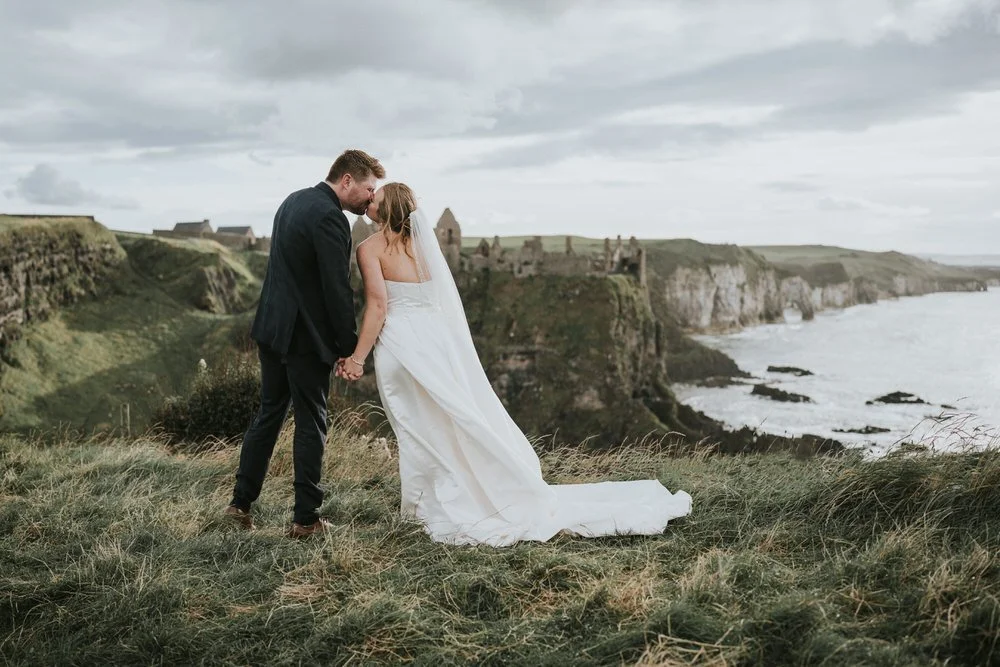
Early morning or late afternoon usually gives the best light, because you avoid the high midday sun. If you have a fine day with low cloud, golden hour, the hour before sunset, is the best light of all. These times also help avoid crowds, which makes it easier to capture intimate photographs. Our guide to the best time of day for wedding photos has real sunset times for every month, and our guide on what happens if it rains on your wedding day shows how we plan for the weather.
Planning
How to plan your photos among the ruins
Planning a wedding session in a ruin takes some forethought. This is the part many couples miss, so please read it before you fall in love with a location.
Permission comes first
Activities at state care monuments are regulated, and the Department for Communities says permission must be sought and granted beforehand. Wedding photography is one of the activities listed. Applications go by email to the Historic Environment Division, and they must arrive at least 15 working days before the activity, or they will be rejected. The department aims to decide within 10 working days of receiving everything it needs, and bookings may be subject to charges. Read the full details on the official hiring a state care monument page.
Apply early
Do not leave it late. Applications sent 11 to 19 days before the activity attract extra administrative charges, so plan well ahead.
Check access
Some ruins have restricted access at times, and some are remote. Check travel time, transport and parking in advance.
Wear suitable footwear
Ruins often have uneven ground, stone steps and open spaces. Wear sensible shoes between locations, and change into formal shoes for the photographs if you prefer.
Choose your timing
Early morning or late afternoon gives the best light and fewer people.
Not sure how much time you will need? Our wedding photography shot list helps you decide what to ask for. If you would like a relaxed practice session first, look at our best places for engagement photos in Northern Ireland.
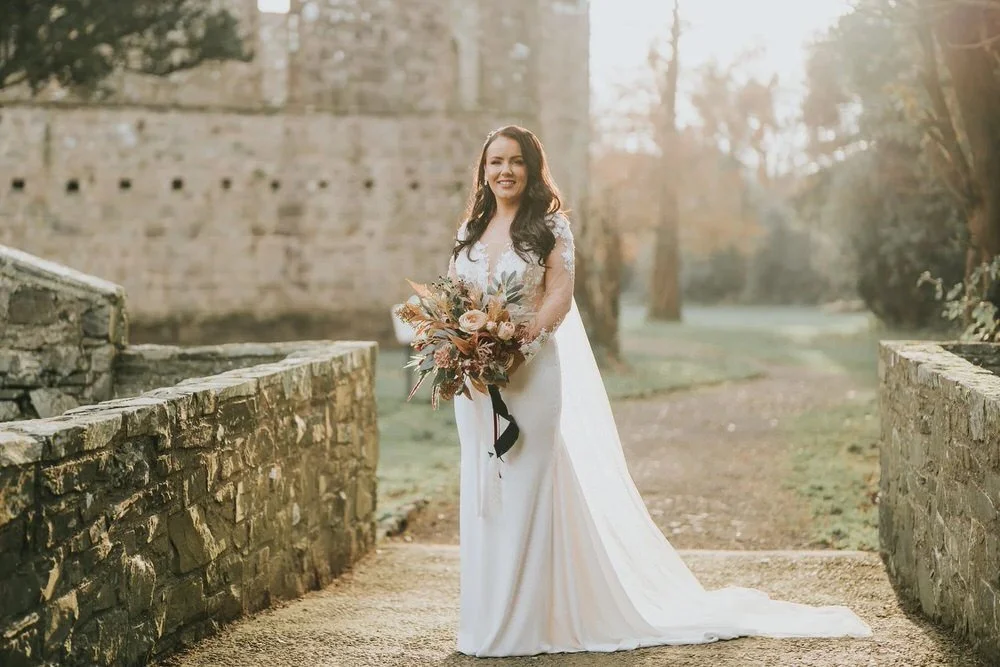
How we photograph ruins
How we approach ruins
Working in a historic setting brings both opportunity and challenge. These are the things we focus on when we photograph a couple among the ruins.
We use natural light
Timing for good quality light matters more than anything else.
We frame with architecture
Arches, windows and walls create natural frames around you.
We balance scale and intimacy
Wide shots show the grandeur, and close shots keep the emotion.
We include texture
Stone, ivy and shadow add richness to your photographs.
We embrace the weather
Mist, rain or wind can add mood if it is handled carefully.
We tell the story of the place
Each ruin has its own past. Capturing both you and the setting tells a fuller story, and it keeps your album feeling authentic instead of staged.
We keep our editing restrained. Subtle edits that bring out texture and tone work much better than heavy filters, so your photographs feel timeless and will not date quickly. This is the same documentary thinking behind how we photograph every wedding.
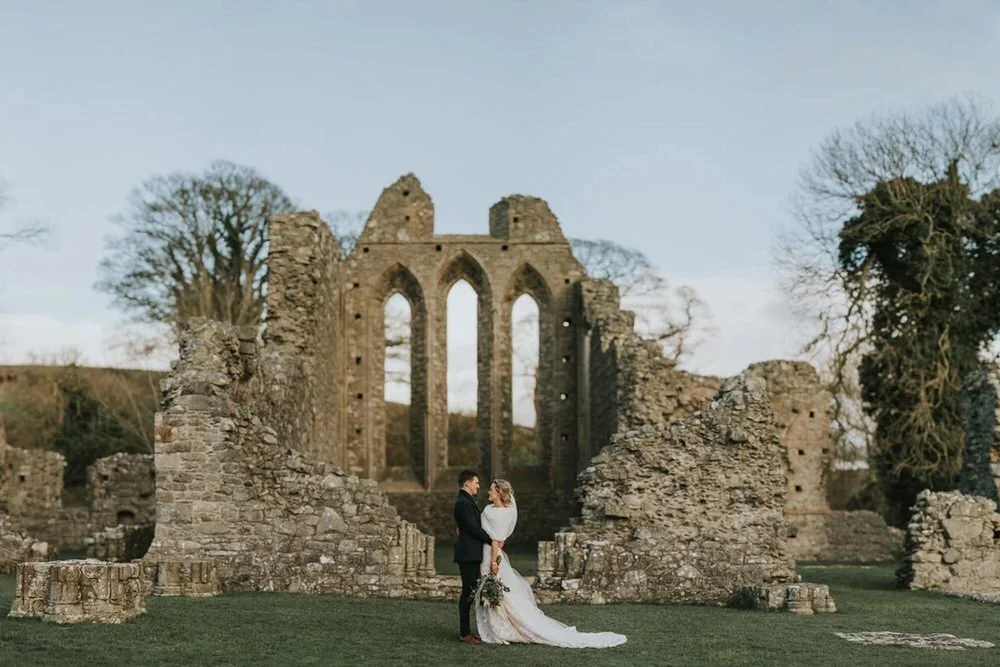
Your wedding or elopement
Your story, told among the ruins
Your wedding or elopement deserves more than photos. It deserves a story told against the beauty of Northern Ireland, whether that is the dramatic Causeway Coast or quiet ruins such as Grey Abbey and Inch Abbey. If you are dreaming of a day that feels personal, soulful and unforgettable, we would love to help.
Getting married in or around the city instead? Take a look at our Belfast wedding photographer page, or see how we photograph a full day in our real weddings.
Questions we hear
Common questions about ruins wedding photos
Can we have wedding photos at Dunluce Castle?
Dunluce Castle is looked after by the Department for Communities, and permission must be sought and granted before any wedding photography at a state care monument. Applications go by email to the Historic Environment Division at least 15 working days before the activity.
Do we need permission for wedding photography at castle ruins in Northern Ireland?
At state care monuments, yes. The Department for Communities lists wedding photography among the activities that need permission, and charges may apply. For other sites, such as Dunseverick Castle, check with the National Trust or the landowner before you go.
How much notice do we need to give?
The Department for Communities asks for applications at least 15 working days before the activity, and late applications will be rejected. It aims to decide within 10 working days of receiving everything it needs, so we suggest applying much earlier.
What is the best time of day for wedding photos in the ruins?
Early morning or late afternoon usually gives the best light and helps you avoid the high midday sun. If you have a fine day with low cloud, golden hour, the hour before sunset, is the best light of all.
What if it rains or is windy?
Bring an umbrella and be ready for changing weather. Mist, rain and wind can add mood to the photographs, and wind makes veils and dresses move beautifully. We plan around the weather with you on the day.
Which ruin is the most private?
Dunseverick Castle is less visited than Dunluce, so it offers more privacy, and Grey Abbey is quieter than many other ruins. Early morning and late afternoon also help you avoid crowds.
Is Inch Abbey free to visit?
The Department for Communities says entry to Inch Abbey is free, but public access is sometimes restricted due to works, so check before you visit.
What should we wear for ruins photos?
Wear suitable footwear for uneven ground and stone steps, even if you plan to change into formal shoes for the photographs. Bring an umbrella and a layer for the wind.
Do you photograph elopements at ruins?
Yes. We often use Dunseverick Castle for elopement photography, and we highlight the cliffs, the sea and the castle remains together for photographs that feel romantic and raw.
Planning your day
Let us plan your ruins session
Send us your date and the place you have in mind and we will check if we are free. You can look at our prices in Northern Ireland first, or see how we photograph a day in our real weddings.
Keep reading
More wedding planning help
- When should I book a photographer for my wedding
- Best registry office for a wedding in Northern Ireland
- First look with your dad on your wedding day
- How many wedding photos should I get
- Why we love wedding photography
- What is included in wedding photography packages in Northern Ireland
- The ultimate guide to bringing your dog to your Northern Ireland wedding
- Wedding photography shot list
- How long should you wait for your wedding photos
- Best places for engagement photos in Northern Ireland
- Mistakes to avoid when booking wedding vendors
- Should I book a content creator for my wedding
- Best time of day for wedding photos
- What happens if it rains on your wedding day